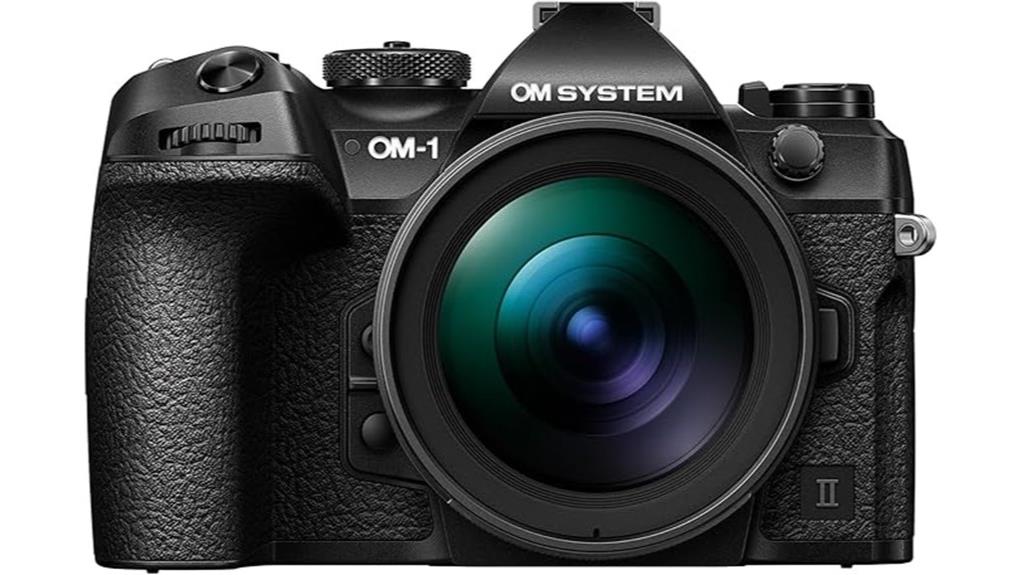
You’ll find the OM System OM-1 Mark II a punchy, compact Micro Four Thirds body that boosts speed, stabilization and computational tools over the original. It delivers clean 20MP stills, 10‑bit 4K/60p video, and a 1,053‑point Cross Quad Pixel AF for fast tracking. Continuous shooting reaches 60 fps with UHS‑II support and five‑axis IBIS helps handheld work. Build, weather sealing and pro controls suit field use, and more detailed comparisons and test notes follow.
Some Key Takeaways
- The OM‑System OM‑1 Mark II pairs a 20MP stacked BSI sensor and TruePic X processor for clean high‑ISO stills and fast buffer clearing.
- Up to 60 fps continuous shooting with 1,053‑point Cross Quad Pixel AF delivers reliable subject tracking for sports and wildlife.
- Five‑axis in‑body stabilization plus effective lens IBIS yield handheld sharpness and steady run‑and‑gun 4K/60p video.
- Computational modes (handheld high‑res, Live ND/GND, focus stacking) expand creative options without tripod reliance.
- Compact, weather‑sealed magnesium body with pro ergonomics, robust connectivity, and practical battery/charging solutions for field use.
Is the OM System OM-1 Mark II the Right Camera for You?
If you need a compact, rugged mirrorless body that balances high-speed performance with advanced computational tools, the OM System OM-1 Mark II is worth serious consideration. You’ll get 20MP stacked sensor speed, 1,053-point AF coverage, 60 fps bursts and 4K/60p video in a weather-sealed, lightweight body with a pro-grade 12–40mm f/2.8 kit lens. It’s ideal if you prioritize action, travel, or hybrid photo/video work. Consider budget alternatives if cost limits you, and check learning resources—manuals, tutorials, and community forums—to shorten the learning curve and optimize system strengths. The site also offers curated accessories and essentials for mirrorless camera enthusiasts to complement the OM-1 Mark II.
What’s New: Key Upgrades Over the Original OM-1
Since the OM-1 Mark II builds on an already capable platform, it’s helpful to compare specific upgrades so you can judge real-world gains. You’ll notice stacked sensor advancements deliver faster readout and improved AF responsiveness, reducing rolling shutter and expanding burst potential. TruePic X boosts processing up to 3x, enabling cleaner high-ISO performance and quicker buffer clearing. Autofocus gains include denser Cross Quad Pixel AF coverage and higher continuous shooting rates for action work. Computational photography enhancements extend handheld high-res, Live ND/GND, and focus stacking workflows, making multi-frame techniques more reliable without a tripod. Overall, upgrades prioritize speed and practical versatility. The site also offers tools to help you maintain accurate color across devices with color calibration for consistent results.
Image Quality and Video Performance Put to the Test
How does the OM‑1 Mark II perform when you demand both still-image fidelity and robust video capture? You get clean 20MP stills from the stacked BSI Live MOS sensor and TruePic X processing that deliver detailed raws and confident JPEGs. Its 10-bit pipeline and 4K60p video give you flexible grading room; the camera’s color science yields natural skin tones and reliable hues straight from camera. Low light performance is strong for Micro Four Thirds: managed noise, usable dynamic range and effective stabilization help extract detail. Overall, it balances stills and video needs without overstating strengths or hiding limitations. For users who rely on accurate onscreen color when editing, proper monitor calibration with hardware calibration ensures your images appear true to life.
Autofocus, Speed, and Stabilization: Real-World Results
When you push the OM‑1 Mark II in demanding situations it delivers predictable, high‑precision autofocus, blistering burst rates, and rock‑steady stabilization that lets you concentrate on composition. You’ll notice Cross Quad Pixel AF locks quickly across the frame, making sports autofocus reliable across wide coverage. Continuous shooting up to 60 fps keeps sequences intact, and buffer management stays practical with fast UHS‑II cards. In dim venues low light tracking remains usable, with occasional hunting only at extreme margins. In handheld shooting the five‑axis stabilization compensates effectively, reducing blur and simplifying framing for fast action and run‑and‑gun work. For photographers looking to measure exposure precisely in varied lighting, pairing the camera with a dedicated light meter can improve consistency and confidence.
Lens, Handling, Weather Sealing, and Physical Features
Although the 12–40mm f/2.8 PRO II sits compactly on the OM‑1 Mark II, you’ll immediately notice a pro-grade balance and handling that keeps controls reachable for extended shoots. The bundled lens handling is refined: zoom and focus rings are damped with tactile lens ergonomics suited to quick adjustments. Build materials feel robust without excess weight; the magnesium alloy body and sealed joints convey durability. Weather sealing rates IP53 and freeze-proofing to −10°C, so you can work in adverse conditions. Physical features are practical and uncluttered, and the thoughtful port layout keeps essential connections accessible without hindering grip. For photographers using external monitors and recorders, having the right HDMI accessories like HDMI cables for cameras ensures reliable video output and secure connections.
Battery Life, Ports, Connectivity, and Workflow Considerations
Because power efficiency matters on long shoots, the OM‑1 Mark II pairs its BLX‑1 Li‑ion battery with conservative power management and multiple charging options to keep you working longer. You’ll find battery optimization in menus (auto power-off, screen dimming, sleep timers) and an included F‑7AC adapter plus USB-C options for in-field top-ups. Ports cover USB, Micro‑HDMI, and a video out for monitoring; dual USB ports aid simultaneous charging and data transfer. Wi‑Fi and Bluetooth enable quick offload and control, while tethered shooting over USB supports studio workflows. Plan backups and card rotation to sustain continuous production. Consider keeping a dedicated dual battery charger in your kit to minimize downtime on extended shoots.
Who Should Buy the OM-1 Mark II and Best Kit Recommendations
If you need a compact, weatherproof hybrid that excels at fast action, handheld high‑resolution shots, and reliable autofocus across stills and 4K video, the OM‑1 Mark II deserves serious consideration. You should buy it if you prioritize portability, ruggedness (IP53, freeze‑proof), and advanced AF/60 fps bursts for sports, wildlife, or event work. Micro fourthirds benefits like small lenses and strong stabilization favor travel and run‑and‑gun shooters. For kit versatility, the 12‑40mm f/2.8 PRO II delivers an excellent all‑round zoom; add a tele zoom or fast prime for wildlife or low‑light needs. It’s ideal for hybrid creators upgrading from entry models. Perfect Tripods recommends matching the camera with a compact, sturdy tripod to maximize sharpness in long exposures and telephoto work, especially when using compact lenses.
Some Questions Answered
Does It Support In-Camera Vertical Video Recording?
Yes — you can record vertically in-camera. You’ll hold the camera in portrait orientation, and it preserves portrait metadata so compatible players and editors recognize the orientation. Vertical stabilization remains active, keeping footage steady with the body’s image stabilization and digital assist. You’ll get 4K/60p with stabilized vertical clips and retained orientation flags, making workflow smoother for social platforms while maintaining full stabilization benefits and proper portrait metadata.
Can It Tether to Smartphones for Live Remote Control?
Yes — you can tether to smartphones for live remote control using the OM SYSTEM wireless app for remote shooting. You’ll connect via Wi‑Fi or Bluetooth, launch the app, and view live view, change settings, trigger the shutter, and record video remotely. Setup is methodical: pair devices, authorize permissions, then use the app’s live feed and controls. It’s reliable for studio or field workflows when you need hands‑off operation.
Is There Dual Card Slot Support via Firmware or Accessory?
No — the camera doesn’t support dual card slots now, and there’s no user-accessible firmware roadmap entry promising that change. You’ll need to rely on the single UHS-II SD slot in the current firmware. Check OM SYSTEM’s published firmware roadmap and accessory compatibility notes periodically; if Olympus/OM SYSTEM adds a docking accessory or firmware update enabling backup/overflow to external media, they’ll announce it there. Stay alert to official releases.
How Well Do Legacy Four Thirds Lenses Adapt Optically?
You’ll get good results adapting Four Thirds lenses to Micro Four Thirds bodies, with Optical Performance depending on lens design and adapter quality. Expect solid center sharpness, some corner softness and vignetting on wide angles, plus potential color fringing that modern in-body corrections can reduce. Manual aperture and AF limitations vary by adapter; stop down for best edge resolution. Test each lens for mechanical coupling and stable mounting before critical use.
Are There Downloadable Picture Profiles or LUTS Included?
Yes — the camera includes downloadable presets and supports user created LUTs for workflow flexibility. You’ll find built‑in picture modes and can load firmware‑provided or manufacturer downloadable presets via OM Workspace or the camera’s SD card import. For video grading you can apply user created LUTs in post or use them on external recorders that accept Cube/3DL formats. Check OM SYSTEM resources for compatible LUT formats and installation steps.