You’ll get pro-grade APS-C resolution and speed with the renewed Canon EOS R7 — a 32.5MP sensor plus DIGIC X delivers sharp stills and sustained processing for hybrid work. Dual Pixel CMOS AF II offers reliable subject and eye tracking, and 30 fps electronic shooting or 15 fps mechanical keeps pace with fast action. Video includes full-width 4K60p with 10-bit Canon Log 3. Bundled lens choices limit low‑light reach, but overall value is strong; more specifics follow.
Some Key Takeaways
- Renewed R7 offers 32.5MP APS-C stills with low noise and fine detail across native ISO range.
- DIGIC X enables fast workflows, 30 fps electronic/15 fps mechanical shooting with per-frame AF/AE.
- Dual Pixel CMOS AF II delivers reliable subject and eye tracking for photos and video.
- Full-width 4K60p, oversampled 4K30p and 10-bit Canon Log 3 provide strong video grading flexibility.
- Renewed bundle includes multiple zooms, spare battery, case, but slow kit apertures and limited warranty apply.
What the Canon EOS R7 (Renewed) Is and Who It’s For
What makes the Canon EOS R7 (Renewed) stand out is its combination of a 32.5 MP APS-C sensor and DIGIC X processor, delivering high-resolution stills, fast continuous shooting up to 30 fps (electronic) or 15 fps (mechanical), and advanced 4K video options—including full-sensor 4K60p and oversampled 4K30p with 10-bit Canon Log 3. You’ll get a professional-grade mirrorless body in used condition, bundled with diverse optics and accessories that extend reach and versatility. You’ll appreciate robust ergonomics, RF/RF-S compatibility, and Dual Pixel AF II. The target audience includes pros and serious enthusiasts needing speed, resolution, and multi-format video workflows. This camera is a great fit for mirrorless camera enthusiasts looking for essential gear and value in a renewed package, especially those interested in mirrorless camera accessories.
Key Specs That Matter: Sensor, Processor, Autofocus, and Video
Because image quality and speed drive creative choices, the EOS R7’s 32.5MP APS-C sensor paired with Canon’s DIGIC X processor gives you high-resolution stills, fast readout, and the processing horsepower to handle demanding autofocus and 4K workflows. You get Dual Pixel CMOS AF II with subject tracking and eye detection, enabling up to 30 fps electronic or 15 fps mechanical bursts with AF/AE per frame. Video supports full-width 4K60, oversampled 4K30 from a 7K area, and 10-bit Canon Log 3. Expect broad dynamic range, reliable thermal throttling and heat management, and pro-grade processing for heavy workloads. This body is well-suited for DSLR enthusiasts and photographers looking for mirrorless performance with familiar handling and essential accessories for DSLR enthusiasts.
Real-World Performance: Image Quality, 4K Video, and Low‑Light Results
When you push the EOS R7 into real-world shooting, its 32.5MP APS-C sensor and DIGIC X deliver sharp, detailed stills with low noise up to the native ISO range. You’ll notice strong dynamic range retention in midtones and recoverable highlights when exposing carefully. Color rendition is accurate and neutral out of camera; Canon Log 3 and 10-bit output give grading headroom for richer hues in 4K. 4K60p from full sensor width yields crisp, oversampled 4K30p benefits with reduced moiré. In low light the camera balances exposure and noise performance well, holding fine detail to high ISOs. This review appears on Gear Guide for Enthusiast Photographers and Camera Fans, a site focused on digital cameras and related products.
Speed and Autofocus in Practice: 30 Fps, Dual Pixel AF II, and Tracking
Push the EOS R7 to its limits and you’ll see how its 30 fps electronic shutter and Dual Pixel CMOS AF II work together to freeze fast action with reliable subject tracking. You’ll get pre‑frame AF/AE updates per exposure, keeping focus locked on eyes, vehicles, or birds. The DIGIC X sustains high rates, but heavy RAW bursts can trigger buffer overload; use high‑speed UHS‑II cards and shorter bursts to avoid dropped frames. Tracking remains robust across the APS‑C sensor, switching seamlessly between faces and generic subjects. In practice, you’ll balance frame rate, file format, and card speed for best results. For accurately assessing and maintaining your camera’s color performance, consider using a color calibration workflow to ensure consistent results across shoots.
Lens and Bundle Breakdown: What’s Included, Useful Add‑Ons, and Limitations
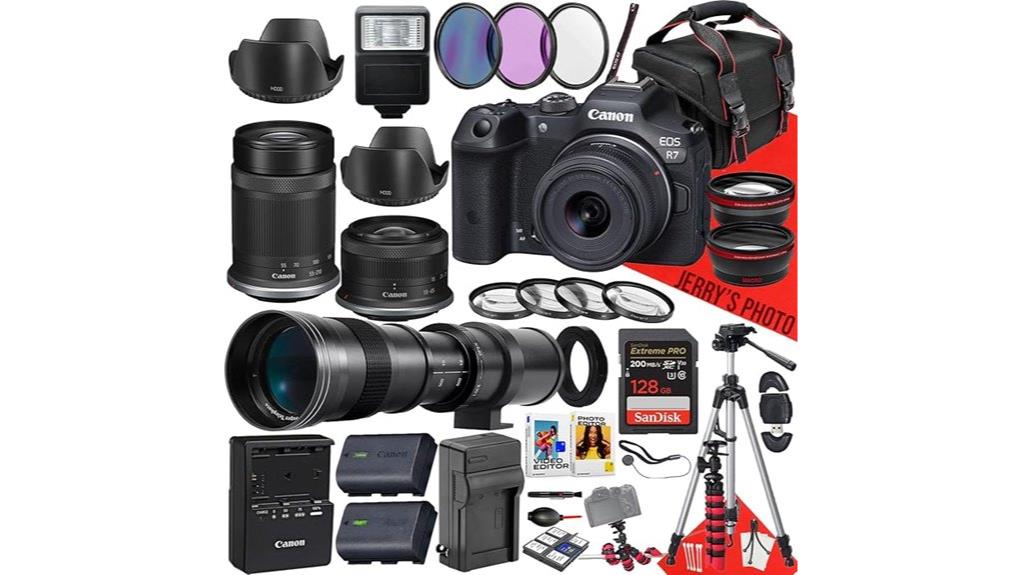
Dig into the bundle and you’ll find the EOS R7 paired with a broad but uneven kit: two native RF‑S zooms (18–45mm f/4.5–6.3 and 55–210mm f/5‑7.1), a long 420–800mm f/8.3 tele zoom, plus a host of accessory optics and extras that inflate the piece count to the advertised 38–49 items. You’ll get practical coverage for walkaround, tele and super‑tele needs, plus filters, hoods, spare battery and case. Note limits: slow maximum apertures reduce low‑light use, optical quality varies, and true professional glass is absent. Consider third party lenses via mount adapters; check accessory compatibility and warranty transfer terms. If you plan to travel with this kit, choose a durable drone carrying case or similar protective case sized to fit the components.
Battery, Handling, Connectivity, and Everyday Usability
Although the R7 packs advanced internals into a compact mirrorless body, you’ll notice battery life and ergonomics dictate how you shoot day‑to‑day. You get a spare replacement battery in the renewed bundle, which improves battery longevity but expect intensive 4K60p or 30fps bursts to drain cells quickly. Handling ergonomics are strong: textured grip, logical controls, and a clear 3-inch LCD plus EVF that speed framing and manual adjustments. Connectivity options include Wi‑Fi for transfer and remote control; SDHC media support keeps storage simple. Overall, these factors shape an efficient everyday workflow for hybrid photo/video shooters. Consider keeping an extra spare camera battery on hand to extend shooting sessions and avoid interruptions.
Value Verdict: Is the Renewed EOS R7 Bundle Worth Buying?
With reliable ergonomics and a spare battery that mitigates the R7’s heavier power draw during prolonged 4K recording, you can now assess whether this renewed EOS R7 bundle delivers real value. You get a 32.5MP APS-C body, DIGIC X processing, Dual Pixel AF II, 4K60p and 10-bit cinema features, plus a wide accessory set that minimizes immediate additional spend. Factor the 90-day limited warranty and confirm warranty transferability before buying. Consider long term depreciation on renewed electronics and lens quality; if you need advanced hybrid video/still performance at a reduced upfront cost, this bundle is compelling. Also consider pairing the kit with dual battery chargers to ensure uninterrupted shooting during long sessions.
Some Questions Answered
Does the Renewed Camera Come With Original Canon Manufacturer Warranty?
No — the renewed camera doesn’t come with the original Canon manufacturer warranty; you’ll get a 90-day limited warranty instead. You should verify warranty transferability with the seller and check retailer guarantees before purchase. If you need extended coverage, ask the retailer about optional protection plans or third-party warranties. Keep purchase receipts and serial numbers to support any future claims and to confirm whether any manufacturer warranty might be restored.
Are Firmware Updates and Canon Support Available for Renewed Units?
Yes — you’ll get firmware access and Canon support for renewed units, but specifics vary. You can download firmware updates from Canon’s website and install them normally; Canon support can help with firmware issues, diagnostics, and authorized repairs. Don’t expect full original warranty length — renewed kits typically carry a 90-day limited warranty here — so confirm coverage and repair/repair-cost policies with the seller before purchase.
Can the Camera Record Externally via HDMI While Using 10-Bit Internal Modes?
Yes — you can externally record via HDMI while using 10-bit internal modes, but there are caveats. External recording and HDMI passthrough work, yet you’ll push processing and generate extra heat; monitor heat management carefully to avoid thermal shutdowns. Expect increased battery drain from continuous HDMI output and recording; use mains or high-capacity power for long takes. Use quality external recorders and cables to maintain 10-bit signal integrity.
Are Any Bundled Third‑Party Lenses Covered Under the Warranty?
No, the bundled third‑party lenses aren’t covered by Canon’s camera warranty; aftermarket lens‑coverage typically falls to the seller or lens manufacturer. You’ll need to verify warranty transferability with the third‑party brand or the renewed-seller—some retailers offer limited guarantees or return windows, but Canon’s 90-day limited warranty applies only to the camera body. Keep receipts and serials to pursue any aftermarket claims or seller-provided protection.
Is the Shutter Count or Refurbishment History Provided With Purchase?
No — sellers typically don’t provide shutter count or refurbishment documentation with renewed purchases. You’ll need to request shutter lifespan details and any refurbishment documentation before buying; insist on written confirmation. If they can’t supply it, assume standard renewed grading without full service history. Verify the 90‑day limited warranty terms, check return policy, and consider a prepaid inspection or independent service to assess shutter health and overall refurb status.