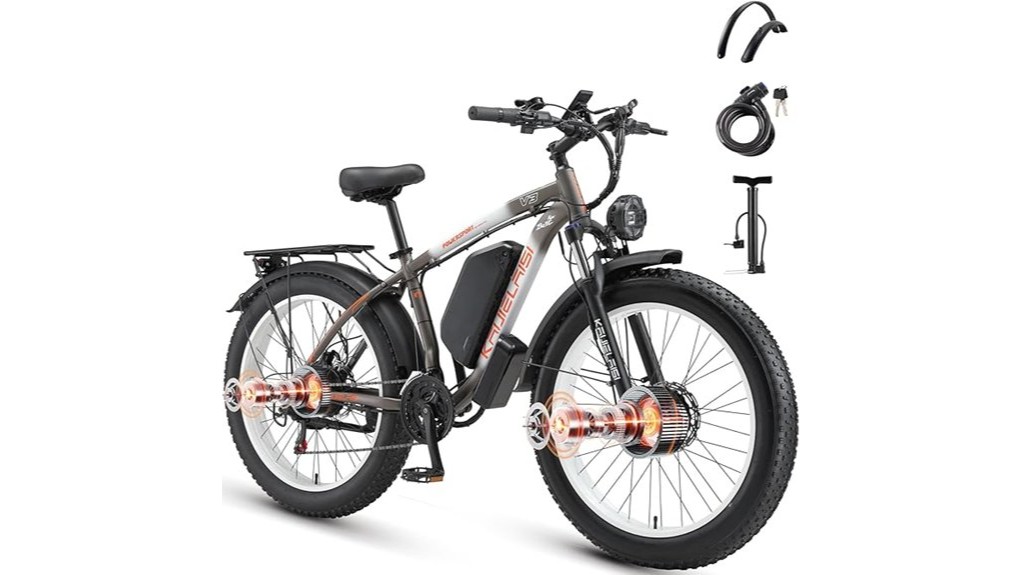
You’ll get a burly AWD fat‑bike that’s built for heavy loads and steep climbs, not lightweight commuting. Twin 2000W motors and 85 N·m torque give immediate traction and confident hill climbs, with selectable single/dual motor modes for control. Fat 26×4″ tires and dual suspension smooth rough surfaces, while dual hydraulic discs stop reliably. A removable 48V 22.4Ah battery offers ~30+ miles electric, ~50+ with pedaling. Keep weight and handling needs in mind if you want speed or portability—more details follow.
Some Key Takeaways
- AWD twin 2000W motors deliver strong, immediate traction and hill-climbing up to about 40° for confident off-road and steep-gradient riding.
- 26×4″ fat tires plus dual suspension offer stable, comfortable rides on rough terrain but reduce nimble city handling.
- Removable 48V 22.4Ah (≈1,076 Wh) battery yields ~30+ miles electric, ~50+ miles pedal-assist, depending on load and conditions.
- Heavy 103‑lb frame supports cargo and touring but makes transport, storage, and tight‑traffic maneuvering more difficult.
- Dual hydraulic brakes, selectable single/dual motor modes, and controller speed limits improve safety and customizable performance.
Which Riders Should Consider This AWD Electric Bike (Quick Verdict)?
If you tackle steep climbs, rough trails, or want a powerful daily commuter with serious off-road capability, this AWD electric bike is worth considering—its twin 2000W motors, 85 N·m torque, and fat 26×4″ tires deliver strong traction and hill-climbing confidence, while removable 48V 22.4Ah battery and multiple ride modes give flexibility for longer rides or electric-only sprints. You’ll appreciate its heft and stability if you’re a commuter who needs all-weather reliability or a rider planning long distance touring on mixed surfaces. It suits riders seeking raw capability, cargo or heavier loads, and versatility over pure speed or lightweight portability. Consider pairing it with a compatible ebike rear rack to carry gear, panniers, or extra batteries for extended adventures.
How the Dual 2000W Motors Perform on Hills, Acceleration, and Top Speed
Climb with confidence: the twin 2000W motors deliver immediate, sustained power that makes steep grades feel manageable—85 N·m of torque and AWD traction let you tackle inclines up to about 40° with less pedal strain, and the bike maintains strong low-end pull for technical climbs. You’ll notice brisk acceleration from standstill; hill launches feel controlled rather than jerky thanks to built-in torque management and selectable single/dual motor modes. Top speed is governed by the controller (adjustable to factory limits), so you get rapid, stable sprints without sacrificing traction. Overall the system balances raw power with finesse for varied terrain. For riders who enjoy off-road adventures, pairing this motor setup with the right ebike motor accessories can further enhance performance and durability.
Real-World Battery Range and Charging: What to Expect From the 48V 22.4ah Pack
Expect real-world range to fall short of ideal figures: the removable 48V 22.4Ah (about 1,076 Wh) pack will typically deliver around 30+ miles on full-throttle electric-only rides and up to roughly 50+ miles when you use pedal-assist, but your numbers will vary with rider weight, terrain, speed, assist level, and weather. You’ll charge in about 8–10 hours using the stock charger; real world charging times lengthen with partial top-ups and cold temps. Look for capacity fade testing results over months. Good thermal management and conservative assist choices are key to range optimization and battery longevity. Consider pairing the bike with an ebike range extender to maximize your outdoor adventures.
Ride Comfort, Handling, and Safety: Suspension, Brakes, and Fat Tires
While the AWD V3’s fat 26×4-inch tires and heavy-duty front fork soak up rough surfaces and give you confidence on loose or snowy trails, that plush ride does come with trade-offs: the 103‑lb frame and cushioned seat deliver long-ride comfort but make quick nimble handling and fast directional changes heavier than on lighter e-bikes. You’ll appreciate the dual suspension and heavy-duty fork for trail compliance, though ideal suspension tuning is needed to balance comfort and control. Dual hydraulic discs provide strong wet weather stopping and predictable modulation, but the bike rewards measured inputs rather than aggressive twitchy maneuvers. For riders who spend time on varied terrain, carrying the right essential gear can improve safety and enjoyment.
Ownership Checklist: Assembly, Settings, Warranty, and Who This Bike Isn’t For
You’ve got a solid feel for how the V3 rides, so now let’s cover what you need to know to get it road-ready and protected. Follow an assembly checklist: torque handlebars, tighten pedals, secure battery, align wheels, bleed brakes, inflate fat tires, attach fenders and mirror, test electrical systems. Set speed limit (08P=60), choose single/dual motor, and personalize PAS modes. Register the bike, photograph serial numbers, and keep charge records for warranty claims—manufacturer wants photos/videos for fault analysis. Not for lightweight commuters, tight-traffic city riders, or anyone unwilling to handle a 103‑lb, high-power fat‑tire machine. Consider investing in purpose-built ebike maintenance gear and parts to keep your V3 performing on trails and in the elements.
Some Questions Answered
Is This Bike Legal to Ride on Local Bike Paths and Trails?
Probably not universally — you’ll need to check classifications required and local ordinances. With dual 2000W motors (4000W peak), 48V battery, heavy 103 lb build and high speeds, many bike paths or trails restrict e-bikes by power, top speed, or class. Contact your local parks dept or transportation agency, review class definitions and permits, and carry proof of specs. You might be allowed on some routes but banned on others.
Can the Battery Be Flown With Airlines During Travel?
No — you usually can’t check the bike’s installed battery on flights; airline rules restrict lithium-ion cells over certain watt-hours. For travel, you’ll need to remove the 48V 22.4Ah (≈1,076 Wh) battery and arrange battery carriage per airline rules; most forbid >100 Wh in carry-on and require airline approval for 100–160 Wh, while >160 Wh is typically prohibited. Contact the airline, follow packaging, documentation, and shipping alternatives.
Are Replacement Parts and Accessories Readily Available?
Yes — you’ll find common replacement parts like brake pads, tires, and aftermarket racks fairly accessible through the manufacturer and third-party sellers. Replacement batteries are available but check compatibility and UL certification; OEM stocks may be limited, so expect some wait times. You’ll want to confirm motor and frame-specific components before ordering. Overall, parts aren’t scarce, but proactive verification and ordering from reputable sources will save you time and hassle.
How Loud Are the Motors and Drive System During Use?
You’ll find motor noise noticeable at full power but not oppressive; dual 2000W motors hum and whine under heavy load, especially climbing. Drivetrain vibration is modest thanks to the beefy 21-speed system and suspension, but you’ll feel some buzz through the frame at high RPMs. At cruising speeds and in pedal-assist modes the sound drops markedly. You’ll want ear protection only for sustained high-throttle runs.
Does the Bike Support Smartphone Connectivity or a Companion App?
No — it doesn’t offer full smartphone connectivity or a dedicated companion app for features like App pairing or over‑the‑air Firmware updates. You’ll use the handlebar controls and display for settings, motor mode switching, and speed limits. The manufacturer may provide firmware updates via dealer/service centers, not directly through your phone. If mobile app integration matters, consider models explicitly advertising Bluetooth app pairing and OTA firmware support.