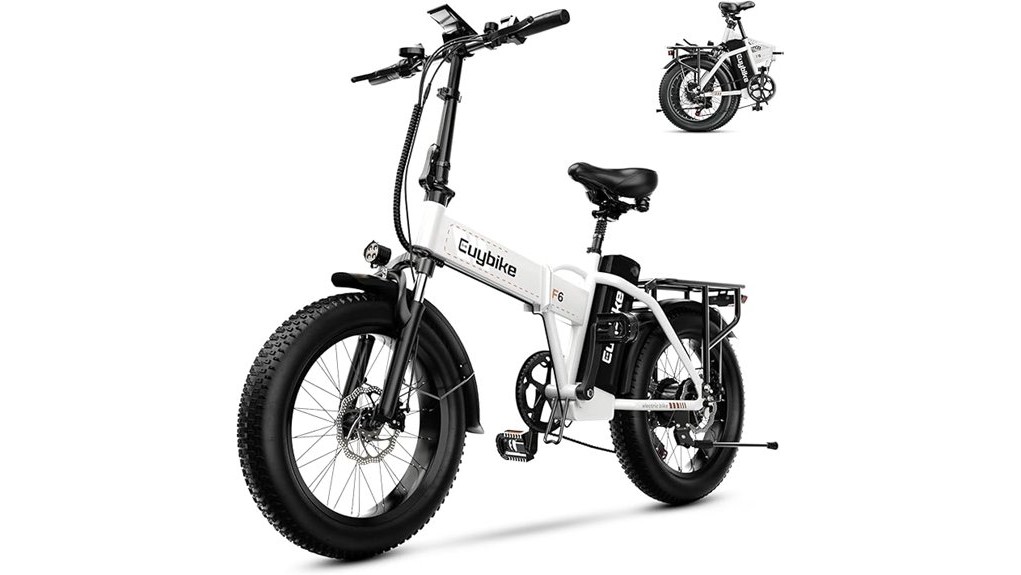
The Bluebiko F6 (2025) gives you serious range and hill power in a compact, foldable package—750W nominal (1,000W peak) hub motor, removable 48V 20Ah battery, and 20″ fat tires that handle sand, snow, and city streets. It’s sturdy and comfortable with front suspension, dual discs, and conservative PAS tuning, though it’s heavy and the motor can get noisy under load. If you want big miles and utility in a transportable ebike, there’s more to uncover about its trade-offs.
Some Key Takeaways
- Powerful 750W nominal (1,000W peak) hub motor delivers brisk launches and sustained high-speed cruising up to 30+ MPH throttle.
- Removable 48V 20Ah (960Wh) battery offers up to ~80 miles in conservative conditions; real-world range varies with speed, load, and climbs.
- Sturdy high-carbon-steel foldable frame is durable but heavy, with folding joints requiring periodic maintenance to prevent corrosion.
- 20″ fat tires, front suspension, and shock-absorbing seatpost provide comfortable mixed-terrain rides, though not for aggressive singletrack.
- Dual disc brakes with EABS, three ride modes, and five PAS levels yield confident stopping and conservative, reliable pedal assist.
Quick Verdict: Should You Buy the Bluebiko F6 (2025)?
While it won’t be perfect for every rider, the bluebiko F6 (2025) is a compelling option if you want a powerful, foldable commuter that handles mixed terrain. You’ll appreciate its 960Wh battery, sturdy high-carbon-steel frame, and fat tires for varied surfaces, but watch weight and corrosion risk. For city commuters who need range and versatility it’s strong value, yet long term durability hinges on maintenance of folding joints and electrical components. Resale potential looks decent thanks to battery capacity and recognizable specs, but cosmetic wear and service history will materially affect future value. Consider your priorities before buying. The bike is especially appealing to outdoor adventure riders who want a compact ebike they can easily transport to trails and campsites.
How the F6 Performs: Motor, Speed, Climbing, and Riding Modes
Because the F6 packs a 750W nominal (1,000W peak) hub motor and a 960Wh removable battery, you’ll get brisk launches, sustained high-speed cruising, and meaningful hill power for most urban and mixed-terrain rides. You’ll reach 30+ MPH in throttle mode and move confidently on 20″ fat tires. Torque delivery feels strong and linear in higher PAS levels, though lower gears need more cadence on steep climbs. Motor noise is noticeable under heavy load—noisy for a hub motor but not intrusive. Three riding modes and five PAS levels give usable control; tuning feels conservative but reliable. This makes the F6 a solid choice for adventure riders who want versatile motor performance across varied outdoor conditions.
Real-World Range and Battery Details: Charging, Removable 48V 20Ah Pack, and Tips to Maximize Miles
Dialing in realistic expectations for the F6’s 48V 20Ah (960Wh) removable battery matters because advertised ranges rarely match mixed-terrain riding; you can expect up to about 80 miles in conservative PAS-assisted, flat-ride conditions but typical real-world figures will be lower once you factor in higher speeds, climbs, rider weight, and stops. Charge often, not fully cycle every time: follow charging etiquette—store at ~40–80% for long holds, avoid extreme heat, and use the supplied charger. Remove the pack for secure charging. Prioritize battery maintenance: keep contacts clean, avoid deep discharges, and plan routes around realistic margins. Consider carrying a compact range extender battery pack for longer outings.
Ride, Comfort, and Build: Foldability, 20 Fat Tires, Suspension, Brakes, and Assembly
Now that you’ve got a realistic sense of the F6’s battery and range, look at how the bike actually rides and feels—its foldable frame, 20″ fat tires, suspension, braking system, and how much assembly you’ll need all shape daily use. You’ll appreciate the sturdy high-carbon-steel frame and simple folding mechanism that clicks tightly but adds weight. Twenty-inch fat tires smooth bumps and grip loose surfaces; expect regular tire maintenance despite puncture-resistant claims. Front suspension plus a shock-absorbing seatpost tame chatter, while dual disc brakes and EABS stop confidently. Assembly is 90% done; tighten, align, test before first ride. Many compact riders prefer compact eBikes for outdoor adventures because they balance portability with off-road capability.
Who the F6 Is Best For : Commuting, Beach, Snow, or Rugged Trails?
Pick the F6 if you need a sturdy, do-it-all folder that balances commuting practicality with off-road capability: its 20″ fat tires, 750–1000W motor and 960Wh removable battery give you confident traction and long range for beach runs, snowy routes, or steep commutes, while the high-carbon-steel frame and simple folding latch make it a solid choice for riders who store or transport their bike frequently—just be aware the frame’s weight and occasional tire maintenance trade off some portability and low-effort upkeep. You’ll appreciate commuter practicality on busy streets and solid trail capability on sand or packed snow, though aggressive singletrack will expose limits in suspension and weight. For riders who value component reliability and terrain-specific performance, consider pedal options designed for mountain ebike use to get the most from the F6’s off-road potential.
Some Questions Answered
What Is the Total Weight of the Bluebiko F6 (2025) When Folded?
The folded weight is about 75 lbs, so you’ll feel its heft when lifting. You’ll appreciate the carrying handle, but don’t expect it to be lightweight for long carries or stairs. You’ll want two people for frequent transport or use a trolley. The foldable design saves space, yet the steel frame, 960Wh battery, and motor contribute to that folded weight, meaning practicality over portability for most commuters.
Can I Legally Ride the F6 on Bike Lanes in My State/Country?
Maybe — but it depends on local regulations and vehicle classification where you ride. You’ll need to check if a 750W/1000W peak, 30+ MPH throttle bike qualifies as an e-bike, speed pedelec, or motor vehicle in your jurisdiction. If classified as a bicycle or class 1/2 e-bike you can use bike lanes; if class 3/speed pedelec or motorized, you may be banned or need helmet, registration, or restricted lanes.
Are Replacement Batteries or Spare Parts Readily Available?
Yes — battery availability and parts sourcing are generally manageable, but not guaranteed everywhere. You’ll find the removable 48V 20Ah pack and common wear parts through bluebiko’s support, major online retailers, and some aftermarket suppliers. Still, expect delays and limited local stock for model-specific items. You’ll want to keep the original box, register your bike, and contact customer service promptly to secure replacements and avoid long waits.
How Long Does Final Assembly Typically Take for a First-Time Owner?
Expect final assembly to take about 45–90 minutes for a first-time owner. You’ll spend extra time on first time maintenance checks—tightening bolts, aligning wheels, and adjusting brakes and derailleurs. Assembly tips: work on a flat surface, use the included tool kit, follow torque suggestions, and charge the battery fully before riding. If you’re uneasy, allow two hours and consider a pro tune-up to guarantee safe, reliable setup.
Is There an App or Smartphone Connectivity for the F6’s Display?
No — there isn’t a full companion app you can use with the F6’s display. You won’t find official Bluetooth pairing for ride data or firmware updates; the color LCD handles basic stats, modes, and charging info locally. That’s limiting if you want smartphone tracking or advanced tuning. You can still adjust assist levels on the bike and use third-party GPS apps separately, but integrated app connectivity isn’t provided.