You’ll get a budget-friendly, PVC-bodied suction cleaner that’ll handle pool floors and walls if your pump delivers about 1,600 gal/h, but traction and debris pickup drop off with weaker flow. Setup’s hands-on — assemble ten hose sections, fit the regulator, and tweak the weight to avoid stalling or skipping walls. It’s quiet and maneuverable yet prone to occasional snagging and wear-prone PVC parts. Keep expectations modest; more detail follows if you want specifics.
Some Key Takeaways
- Effective suction-side cleaner for pools when paired with at least a 1 HP (~1,600 gal/h) pump for reliable traction and cleaning.
- Cleans floors and walls moderately well; performance declines noticeably if pump flow or suction is insufficient.
- Includes 30-foot hose and 5 lb weight; proper weight placement and hose crimps are crucial for steady tracking.
- PVC construction offers low cost and quiet operation but requires regular inspection and occasional part replacement.
- Good budget alternative to pricier models, but lacks robotic convenience and demands more hands-on maintenance.
XtremepowerUS Premium Automatic Suction Vacuum at a Glance (Specs & Who It’s For)
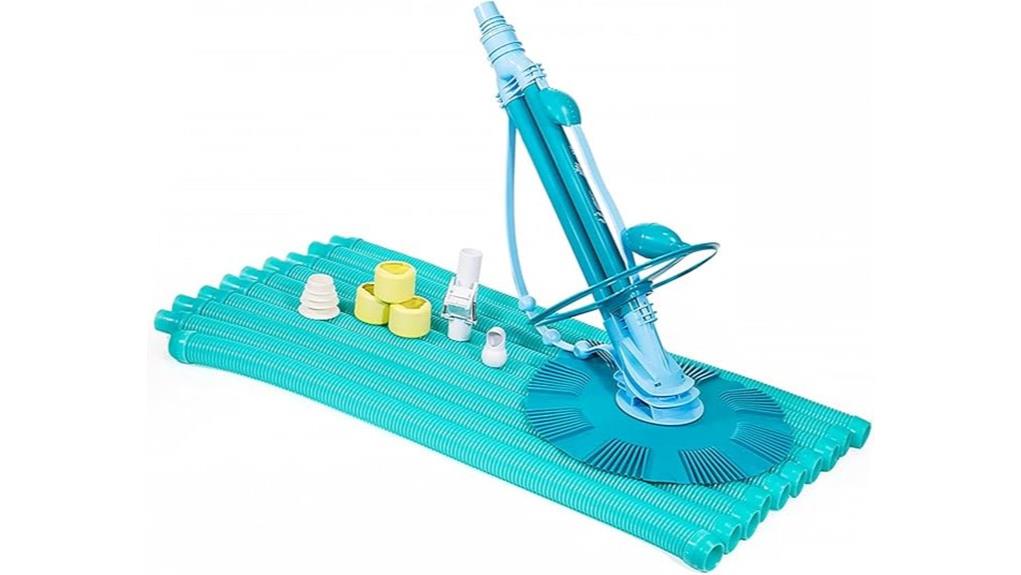
Although it looks compact and simple to hook up, the XtremepowerUS Premium Automatic Suction Vacuum is a purpose-built, in-ground suction-side cleaner that demands you meet minimum pump and flow requirements (1 HP or about 1,600 gal/h) to perform as advertised. You’ll find clear specs: PVC body, 30-foot hose set, 5 lb load, and wall-climbing capability excluding stairs. You should weigh hose length, weight limits, and adjustability against your pool size. Be critical of mixed customer reviews noting durability and tune-up needs; follow a strict maintenance schedule to preserve performance. It suits budget-conscious owners with compatible pumps.
How It Cleans : Performance, Coverage, and Pump Requirements
When you run the XtremepowerUS suction cleaner, expect efficient floor and wall cleaning only if your pump delivers the specified minimum flow—about 1,600 gal/h or a 1 HP motor—because insufficient suction noticeably reduces traction, climbs, and debris pickup. You’ll judge performance by hydraulic efficiency and observable flow dynamics: steady suction maintains climb ability and consistent hose behavior. Surface agitation is moderate, dislodging settled dirt without blasting fragile finishes. Debris retention in the cleaner’s throat is adequate for typical pool detritus, though very fine sand may escape if flow drops. Overall, performance is competent but tightly tied to pump output.
Setup, Parts, and Easy Installation Tips for Best Results
Before you attach the cleaner to your system, gather and inspect every component—hose sections, weight kit, wheel deflector, regulator valve, and hardware—so you can spot damage, missing parts, or incorrect hose calibers that will compromise suction and tracking. You’ll assemble the ten 1.5″ hose pieces, confirming secure crimps and correct length. Fit the regulator valve per manual and test flow; improper settings hide performance issues. Pay close attention to weight placement—too heavy and the unit stalls, too light and it skips walls. Establish a routine for hose maintenance to prevent leaks, kinks, and reduced suction.
Real-World Pros and Cons (Noise, Maneuverability, Durability)
If you value quiet operation and predictable tracking, the XtremepowerUS suction cleaner mostly delivers—its low-noise hydraulic drive keeps pump sound subdued compared with pressure-side models, and you’ll notice steady wall climbs and floor coverage when the hose and regulator are set correctly. In practice, you get good maneuverability around corners and a wheel deflector that helps tight spots, but occasional snagging on steps or tight fittings can interrupt cycles. Build quality suggests long durability for seasonal use, though PVC parts and fittings need inspection. Overall, it balances quiet performance and agile cleaning with some maintenance trade-offs.
Is It Worth Buying? Cost, Alternatives, and Final Recommendation
You’ve seen how the XtremepowerUS performs in real use—quiet, generally reliable tracking, but with occasional snags and PVC parts that need watching—so now weigh that against price and alternatives. For the money, it’s competitive versus basic suction cleaners; a careful price comparison shows savings over robotic models but fewer features. You’ll save initially, yet factor in long term maintenance: PVC hoses and limited warranty can mean parts swaps and service. If you want low-cost, no-frills pool cleaning and can handle occasional tinkering, it’s reasonable. If you prefer hands-off reliability, consider higher-end robots despite higher cost.
Some Questions Answered
Does It Come With Replacement Hoses Under Warranty?
No, it doesn’t automatically include replacement hoses under warranty. You’ll find limited warranty coverage excludes normal wear, accidental damage, and consumables, so hose replacement often falls under warranty exclusions unless a manufacturing defect is proven. You should check hose compatibility with your filtration system before buying and keep purchase records. If you suspect a defect, contact the seller promptly—they may offer a replacement or return under the voluntary 30-day policy.
Can It Clean Pools With Vinyl Liners Safely?
Yes — you can use it on vinyl liners, but proceed cautiously: the unit’s scuff-resistant hoses and wheel deflector reduce liner abrasion, yet loose debris or improper weight/regulator settings can still cause liner abrasion over time. You’ll want to balance weights, keep flow near the 1 HP/1600 gal/h recommendation, and inspect for trapped grit. Overall it offers vinyl safe cleaning potential if you monitor setup, operation, and surface contact closely.
Are Replacement Parts Readily Available Locally?
Not always — replacement parts can be hit-or-miss locally. You’ll often find hoses and basic fittings at pool stores, but specific components like regulator valves, wheel deflectors or OEM filter cartridges may require online ordering. Check local suppliers for matching suction power specs before buying; otherwise you’ll be chasing parts that meet pump flow and cartridge size. Be prepared to source some items from the manufacturer or large retailers.
Is Professional Installation Ever Required or Recommended?
You rarely need professional installation; you can handle the simple attachment to your filtration system, but installation complexity rises if your setup needs adapters or pump upgrades. If you ignore pump requirements or modify plumbing, consider a pro to avoid leaks or poor performance. Be aware warranty limits may void coverage if a nonstandard installation causes damage, so weigh the cost of a technician against potential warranty risks and installation errors.
Does It Work With Variable-Speed Pool Pumps?
Yes — it can work with variable-speed pumps, but you’ll need to manage variable flow for proper pump compatibility. You shouldn’t assume all speeds are suitable: low speeds may starve suction and stall the cleaner, while excessively high flow can shorten parts’ life. You’ll want to test and use the regulator valve and weights to tune performance, aiming for the recommended flow range (around 1600 gal/h) to guarantee reliable operation.