You’ll get a rugged, off-grid soaking solution that heats a 422‑gallon pine tub with an internal stainless‑steel wood stove, so you can enjoy hot soaks or controlled ice baths without electricity. Setup’s straightforward: bolt the pine sections, install the covered stove and chimney, and use the insulated lid to hold heat. Plan on a couple hours to heat, stoke every 20–30 minutes, and monitor temps. Keep tools and dry wood handy, and continue below for full details.
Some Key Takeaways
- Off-grid pine tub with internal stainless-steel wood stove heats ~422 gallons for 4–5 people, ideal for backyard use and gatherings.
- Internal stove speeds heating and reduces heat loss, typically taking a couple hours with seasoned hardwood and 20–30 minute stoking.
- Dual-use as hot tub or ice bath requires careful temperature monitoring, slow transitions, and someone nearby for safety.
- Setup requires assembly, wood fueling, chimney clearance, insulated cover use, and routine stove/chimney maintenance.
- Pros: durable materials and low ongoing energy cost; cons: manual heating, no filtration or pumps, and periodic upkeep.
Quick Verdict and Who This Aleko Hot Tub Is Best For
While it runs on simple wood power, the Aleko Wood Hot Tub and Ice Bath delivers a rugged, off-grid soaking solution that’s ready for both warm, social dips and brisk cold plunges. You’ll appreciate straightforward setup, durable pine construction, and a covered internal stove that heats efficiently without electricity. It’s ideal for off grid enthusiasts who need reliable, low-tech warmth and for homeowners hosting backyard gatherings wanting a memorable, hands-on feature. You’ll manage wood fueling, monitor temps, and use the insulated cover to retain heat. Expect minimal mechanical fuss, routine maintenance, and clear trade-offs between convenience and self-reliant operation.
What’s in the Box and Key Specs (Size, Capacity, Materials)
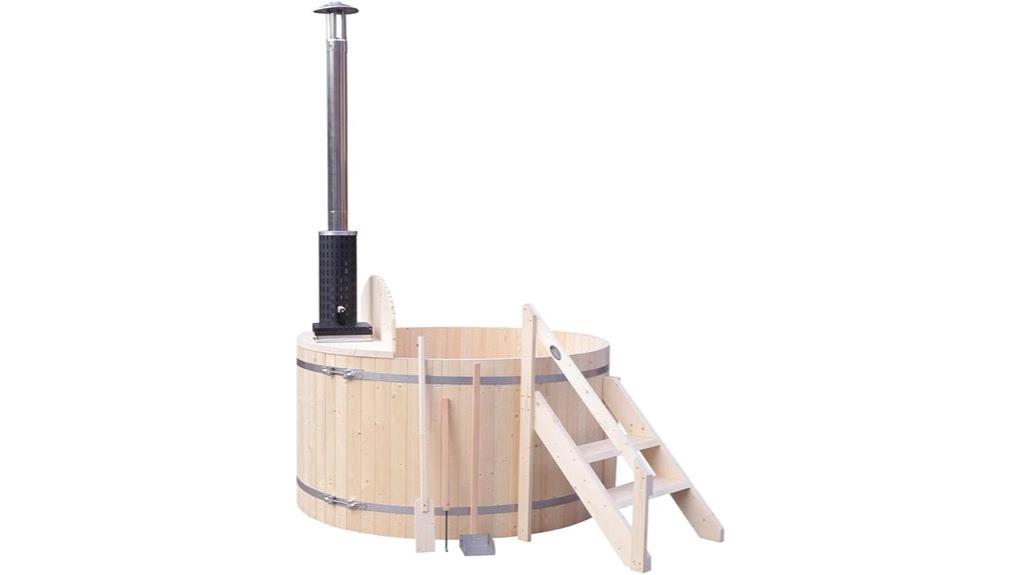
Inside the box you’ll find the Aleko PIWSHTUB components ready for assembly: the circular pine tub sections (pre-cut to form a 70.9-inch diameter, 35.4-inch sidewall), the stainless-steel internal heater and chimney, an insulated cover, wooden stirring paddle, and a set of hot tub steps. You’ll also get fasteners, seals, a basic hardware kit, and instructions. The tub holds about 422 gallons and fits 4–5 people; heater measures 26.1 x 13.1 x 98.2 inches. Pine and stainless steel resist decay and corrosion. Plan for common assembly tools, allow time for sealing, and follow water maintenance guidance for longevity.
How the Internal Wood Stove Heats : Performance, Prep Time, and Efficiency
Light the firebox, and you’ll see how the internal wood stove turns raw capacity into usable heat: the stainless-steel heater sits beneath the tub’s floor so flame and hot flue gases transfer warmth directly into the water column, cutting heat loss you’d get with an external unit. You’ll manage wood burning dynamics by stacking seasoned hardwood, maintaining airflow, and stoking every 20–30 minutes for steady output. Expect a couple hours to reach soak temperature for the 422-gallon capacity. Use heat retention strategies — insulated cover, preheated water, and minimizing lid openings — to keep temps steady and fuel use efficient.
Using It as a Hot Tub vs. an Ice Bath: Setup, Comfort, and Safety Tips
Whether you’re aiming for a steamy soak or a bracing cold plunge, set up differs in predictable, practical ways you can control. For hot use, fill to capacity, load the internal stove with dry wood, and monitor temps until stable; stir with the wooden paddle to equalize heat. For ice baths, preload ice and cool water slowly to avoid shock. Always check entry safety: place steps on level ground, test footing, and have a handhold or towel ready. Respect temperature contrast—move slowly between extremes, limit exposure times, and have someone nearby for assistance.
Pros, Cons, Cost Considerations, and Final Buying Recommendation
Because the Aleko Wood Hot Tub and Ice Bath serves two very different uses, you’ll want to weigh practical trade-offs—durability, operating costs, and installation effort—before buying. Pros: versatile dual-use, off-grid wood heating, stainless-steel stove resists corrosion, insulated cover and accessories included, seats 4–5. Cons: assembly required, manual heating takes time, no filtration or pumps, you’ll need space for chimney and safe clearance. Cost considerations: lower ongoing energy cost but factor in wood, potential chimney/installation expenses, and periodic maintenance. Maintenance tips: dry and oil pine, inspect stove/chimney annually. Resale value holds if well cared for.
Some Questions Answered
How Long Is the Insulated Cover Warranty?
The insulated cover warranty duration is typically one year. You’ll get coverage details that usually include defects in materials and workmanship but exclude normal wear, misuse, or weather damage. You’ll need to register the product and keep proof of purchase; repairs or replacement are handled per the manufacturer’s policy. Check the warranty document for specific claim procedures, exclusions, and any prorated terms so you know exactly what’s covered and for how long.
Are Replacement Chimney Parts Available Separately?
Yes — you can get replacement chimney parts separately. You’ll want to check with ALEKO or authorized dealers for chimney adapters and flue extensions availability. Order the specific stainless-steel pieces to match the internal stove dimensions, and measure your existing chimney sections before buying. Keep part numbers handy (PIWSHTUB components can help). If dealers don’t stock them, ask about OEM replacements or compatible universal adapters and extensions to guarantee proper fit and safe draft.
Can the Hot Tub Be Used Indoors or in Enclosed Spaces?
No, you shouldn’t use it indoors or in enclosed spaces. The internal stove produces smoke and combustion gases, so you’ll need robust indoor ventilation and a proper chimney routing to avoid carbon monoxide. If you insist on partial enclosure, make certain airtight seals, dedicated chimney venting to outside, and carbon monoxide detectors. Also consider space heating effects: the tub will warm the room, so plan airflow, heat barriers, and fire-safe clearances before installation.
What Maintenance Is Required for the Pine Exterior?
You should regularly inspect and maintain the pine exterior: clean debris, sand rough spots, and apply seasonal sealing to protect against moisture and UV. Leave ventilation gaps intact so wood can breathe; don’t seal them. Re-seal every 1–2 years or after harsh weather, tighten fasteners, and replace damaged boards. Store the insulated cover when airing out, and treat any mold or stains promptly with mild cleaner and light sanding before re-sealing.
Is There an Add-On Filter or Pump Option Compatible?
No official pump upgrade or filter cartridge’s included, but you can add them. You’ll need a small external, electric circulation pump and an inline cartridge filter housing sized for 1–2″ hose fittings. Mount the pump below waterline, plumb suction from tub drain, return above floor level. Use stainless hose clamps, check flow rate ~500–1500 GPH. Expect to bolt a power source, weatherproof connections, and test for leaks before regular use.