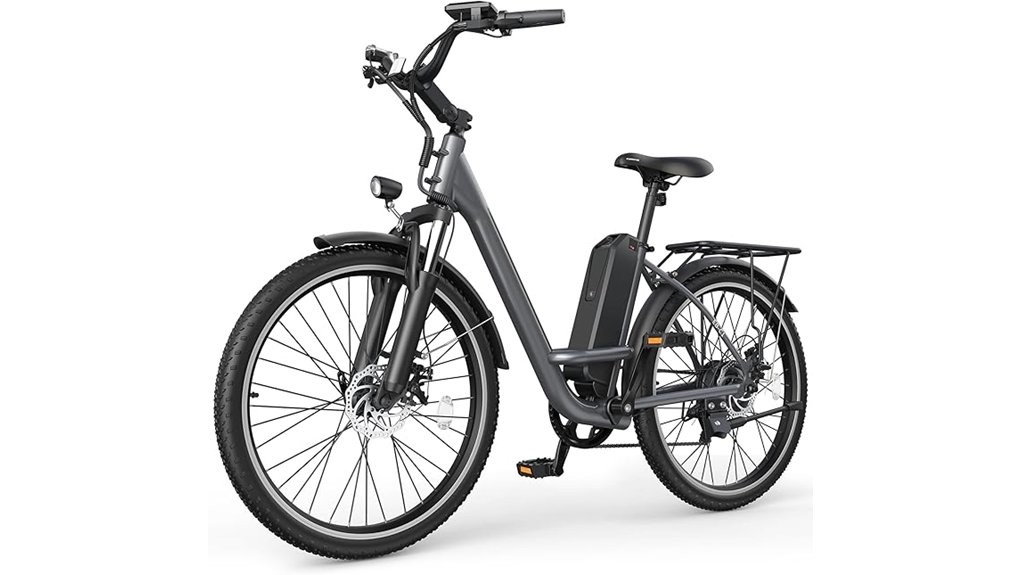
The Peak 1000W EB‑C1 is a utilitarian 26″ step‑through commuter e‑bike with a 500W continuous (1,000W peak) hub motor and 55 N·m torque, built for reliable urban hauling rather than lightweight performance. You’ll get immediate, linear acceleration, competent hill‑climb, and predictable PAS control, plus a removable 48V/374.4Wh IPX5 battery, rack, fenders and integrated lights. Expect 25–30 miles throttle‑only, 40–50 with assist; keep charging etiquette in mind to maximize battery life — more specifics follow.
Some Key Takeaways
- The bike’s 1,000W peak (500W continuous) hub motor delivers immediate, linear acceleration and confident urban hill-climbing.
- Torque peaks around 55 N·m, offering predictable surges at higher PAS for responsive, controlled power delivery.
- A 48V 374.4 Wh removable battery yields ~25–30 miles throttle-only and 40–50 miles with pedal assist.
- Utility-focused design: step-through frame, rear rack, fenders, integrated lights, and adjustable stem for commuter practicality.
- Trade-offs include heavier steel frame, limited top speed, basic IPX5 water resistance, and a one-year warranty.
What the Peak 1000W EB-C1 Is and Who It’s For
Although it looks like a casual cruiser, the Peak 1000W EB-C1 is a city-commuter e-bike engineered for practical urban rides: a 26″ step-through frame, 500W continuous (1,000W peak) hub motor with 55 N·m torque, and a 48V 374.4 Wh removable battery deliver brisk acceleration and acceptable hill-climbing for short commutes. You’ll appreciate its step-through ergonomics, rear rack, fenders, and adjustable stem for predictable fit and cargo utility. It targets urban commuters who want a low-maintenance hub-drive platform rather than performance road bikes. Compared with casual cruisers, it’s more utilitarian, certified, and clearly commuter-focused. Gear up for outdoor adventures with your commuter ebike using accessories like racks and fenders for added cargo utility.
Real-World Performance: Motor, Speed, Range, and Ride Feel
When you open the throttle or step into PAS, the EB-C1’s 500W continuous (1,000W peak) hub motor delivers immediate, linear acceleration with enough torque (55 N·m) to handle typical urban hills and quick merges. You’ll notice crisp throttle response and predictable torque surge at higher PAS levels; power delivery feels controlled rather than brutal. Hill climbing is competent for commuter use, maintaining near-top speeds on moderate grades. Motor heat stays reasonable during typical rides, though repeated hard accelerations raise temps. Ride feel is stable: firm front fork, compliant saddle, and confident disc braking that match the motor’s output. Consider upgrading components like ebike motor controllers to further tailor performance and efficiency.
Battery, Charging, and Reliability: IPX5, BMS, and Actual Range Expectations
Because the EB-C1 uses a 48V, 374.4 Wh removable lithium-ion pack with an IPX5 rating and an onboard BMS, you can expect reliable day-to-day performance and basic water resistance but not full waterproofing for heavy immersion. The BMS manages cell balance, overcurrent and temperature, improving battery longevity when you avoid deep discharges and high-rate drains. Charging etiquette: use the supplied charger, top off to 90–95% for storage, and avoid frequent zero-percent cycles. Real-world range shows range variability: 25–30 miles throttle-only, 40–50 miles with assist. Note waterproof limitations around heavy spray, submersion, and connector exposure. This makes it a solid choice for outdoor adventures where basic battery protection and portability matter.
Fit, Comfort, and Daily Use: Frame, Suspension, Cargo, and Controls
While the EB-C1’s step-through frame and adjustable stem let you dial in a comfortable upright position, the bike is clearly optimized for relaxed urban commuting rather than aggressive riding. You’ll appreciate measured seat ergonomics: wide saddle, moderate padding, and an adjustable seat height suit daily trips but limit long-distance performance. Front suspension softens potholes; calibration favors comfort over sporty feedback. The integrated cargo rack offers secure hauling and multiple storage options for panniers or bags. Handlebar controls are logical and reachable; throttle reach is short and predictable, enabling safe modulation. Overall fit supports commuter utility with pragmatic trade-offs. The bike’s design also complements step-through ebikes favored by outdoor riders for easy mounting and versatile use.
Pros, Cons, and Final Buying Recommendation for Commuters
Having covered fit and everyday handling, let’s evaluate what makes the EB-C1 a practical commuter and where it falls short. You get reliable range (25–30 mi E, 40–50 mi PAS), solid torque, integrated lights, rack and fenders—good utility. Removable 48V battery aids charging but raises battery theft risk if left exposed; you’ll want to lock or remove it. Noise levels are low from the brushless hub motor, aiding urban stealth. Downsides: inconsistent weight listings, steel frame heft, limited top speed, 1-year warranty. Recommendation: good for short-to-mid commutes if you prioritize range and utility over lightness. Consider carrying a spare removable battery to extend your rides and reduce range anxiety.
Some Questions Answered
Is the EB-C1 Suitable for Hill-Heavy Routes With a 300 Lb Load?
Yes — you can use the EB-C1 on hill-heavy routes with a 300 lb load, but manage expectations. Its 55 N·m torque handling and PEAK 1000W surge help climbs, especially in lower PAS or throttle. You’ll want firm suspension tuning and proper tire pressure to maintain control and comfort under load. Range will drop (expect less than rated), and sustained steep grades may strain motor and battery, so plan assist usage accordingly.
Can I Fly With the Battery in Checked or Carry-On Luggage?
You can’t check the EB-C1 battery; airline policies restrict lithium-ion cells over certain watt-hours in checked baggage. The EB-C1’s 48V, 374.4 Wh battery exceeds common 100 Wh limits, so you’ll need airline approval to carry it as carry-on, and many carriers prohibit >300 Wh entirely. Check battery rules and individual airline policies, request written confirmation, and prepare documentation (specs, UL certificates). Expect refusal or special cargo requirements.
What Maintenance Schedule Is Recommended for the Hub Motor and BMS?
You should inspect the hub motor and BMS monthly, perform cleaning intervals every 3 months, and deep-check bearings and seals every 6–12 months. Clean contacts and connectors during cleaning intervals, avoid high-pressure washing, and relube bearings after wet rides. Monitor cells and connections weekly via thermal monitoring and the display for abnormal temps. Replace damaged wiring or sensors immediately and service the motor if you detect noise, drag, or overheating.
Are Replacement Batteries or Aftermarket Higher-Capacity Packs Available?
Yes — replacement options exist, but you’ll want OEM first. You can buy the stock 48V, 374.4 Wh removable pack as a direct replacement; aftermarket capacity upgrades are possible but require matching voltage, connector, BMS compatibility, and physical fit. Higher-capacity packs (larger Wh) can increase range but may void warranty, affect charging safety, and require professional installation. Evaluate cell quality, BMS specs, and mounting before upgrading.
Does the Bike Support Bike-Tracking or GPS Anti-Theft Features?
No — it doesn’t include built‑in GPS tracking or dedicated anti theft alarms. You’ll need to add aftermarket GPS tracking devices or alarmed GPS locks to get real‑time location and tamper alerts. When choosing accessories, prioritize waterproof, battery‑backed GPS units and locks with confirmed vibration/tilt sensors that integrate with smartphone apps. Installation’s straightforward on the frame or rack; verify compatibility with the EB‑C1’s step‑through layout and accessory mounting points.