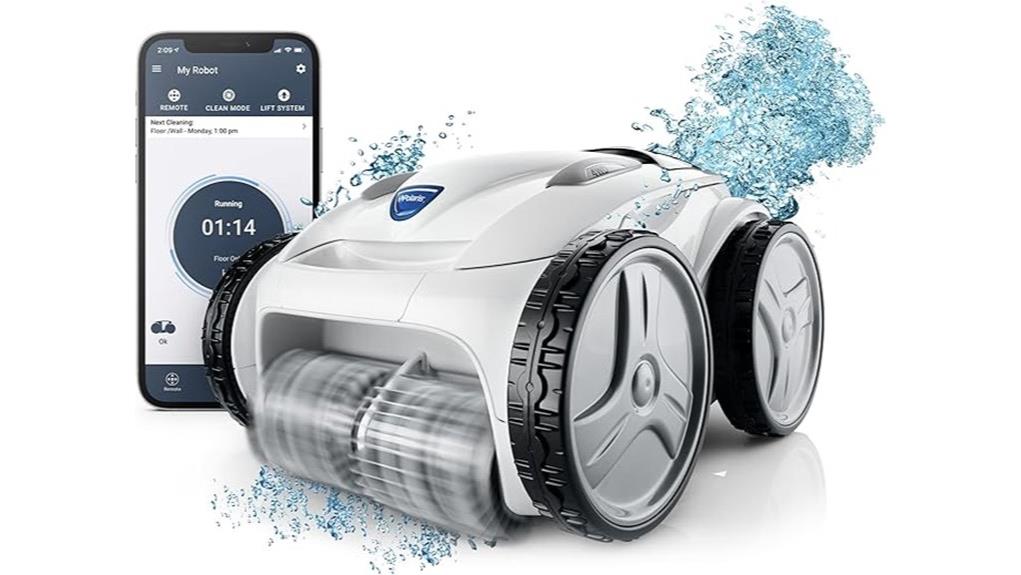
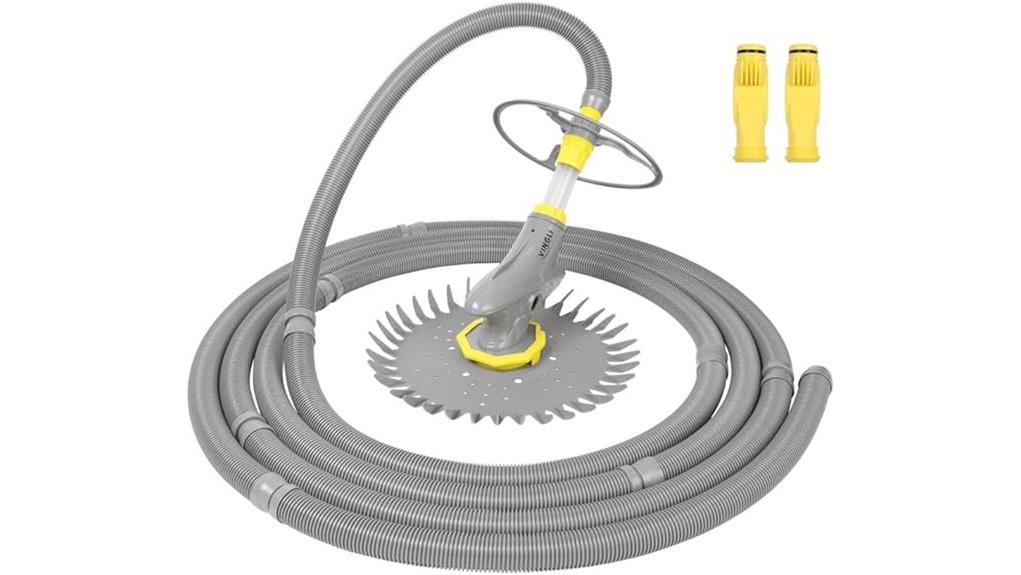
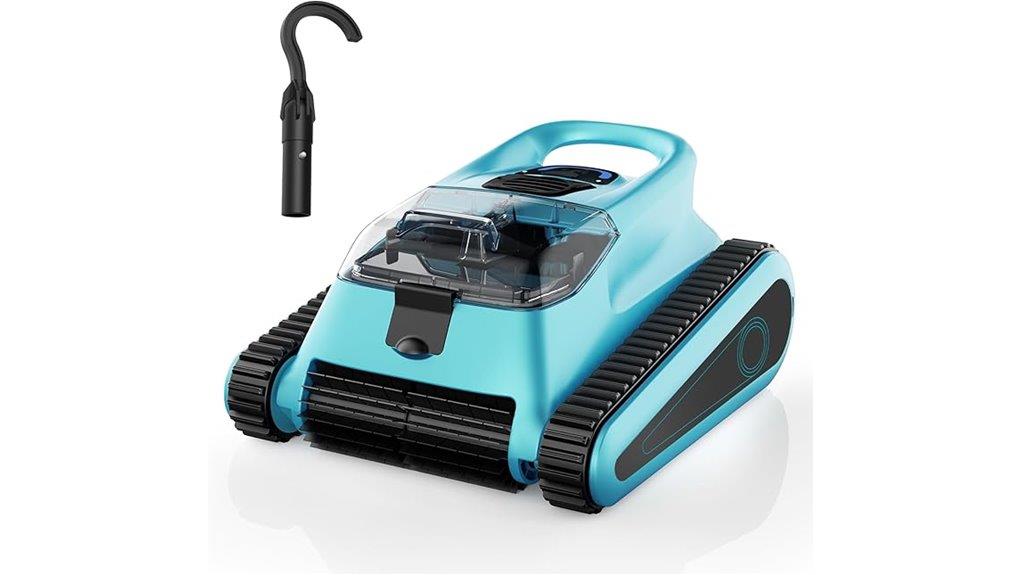
The Hayward Poolvergnuegen 4-Wheel is a no-frills suction cleaner that uses your existing pump and outperforms many basic models on floors, steps, and waterlines of typical 20×40 ft inground pools. Its self-adjusting turbine vanes and aggressive tire treads improve debris flow and climbing, while adjustable roller skirts keep suction on uneven surfaces. It’s reliable, budget-friendly, and easier to maintain than trickier turbine units—keep going and you’ll learn setup, tuning, and best-use tips.
Some Key Takeaways
- Reliable suction cleaner for inground pools up to about 20×40 ft, using your existing pump without a booster.
- Self-adjusting turbine vanes and aggressive tire treads reduce clogs and improve climbing and traction.
- Adjustable roller skirts maintain peak suction on uneven surfaces and around steps.
- Consistent floor-to-wall shifts and solid debris pickup, though fine sand may need additional filter attention.
- Midrange cost with strong value, lower maintenance than basic suction units, backed by a limited warranty.
Quick Verdict : Who the Poolvergnügen Is Best For
If you want a no-frills, reliable suction cleaner that uses your existing pump and handles floors, steps and the waterline of an average inground pool, the Hayward Poolvergnuegen is a smart pick; it’s especially well suited to owners of pools up to about 20×40 ft who prefer low maintenance, strong debris-handling (thanks to self-adjusting turbine vanes) and good climbs over uneven surfaces without needing a booster pump. You’ll appreciate its straightforward setup and durable design if you’re a family with pools or a budget conscious owner. It won’t offer fancy navigation, but it outperforms many basic suction models on reliability and debris clearance.
Key Specs and Patented Features That Matter (Turbine Vanes, Tire Treads, Roller Skirts)
While it looks simple, the Poolvergnuegen packs three patented features that directly affect cleaning performance: self-adjusting turbine vanes that reduce clogs and keep suction strong across varying flow rates, aggressive tire treads that boost climbing and obstacle traction, and adjustable roller skirts that preserve peak suction on uneven surfaces and around steps. You’ll appreciate that turbine vanes minimize routine turbine maintenance and let larger debris pass without stalling. Compared to basic suction cleaners, the tire treads improve skid resistance and wall ascent. Roller skirts let you tune clearance for floors or steps, keeping suction concentrated where you need it most.
Real-World Performance: Coverage, Debris Pickup, Climbing, and Reliability
In everyday use the Poolvergnuegen delivers predictable coverage and solid debris pickup, outperforming basic suction cleaners on climbs and corners. You’ll notice consistent floor-to-wall shifts thanks to steering sequences and tire treads; coverage is more complete than single-wheel models. Debris pickup handles leaves and grit well, though fine sand may need filter attention. Climbing performance is reliable on typical liners and steps, with minimal slippage and low brush wear compared with aggressive brushes. The hose coupling stays secure, reducing loss of suction. Overall reliability is strong; occasional recalibration beats frequent breakdowns common in cheaper suction cleaners.
Installation, Maintenance, and Troubleshooting Tips for Lasting Use
Because proper setup and routine care directly affect performance and lifespan, you’ll want to follow a few focused installation and maintenance practices for the Poolvergnuegen. Connect to the skimmer or suction port per instructions; test flow and watch climbing behavior—adjust roller skirts if it stalls. Perform routine checks: inspect turbine vanes, tires, hoses, and seals; clear trapped debris and rinse after use. Compare wear to replacement parts schedules and swap tires or skirts when traction or suction drops. For off-season, follow Seasonal storage: dry, cool location, hose drained, away from sunlight. Troubleshoot by isolating pump flow and checking for clogs.
Value Checklist: Price, Warranty, Alternatives, and Final Recommendation
If you want solid cleaning without extra hardware, the Poolvergnuegen delivers strong value: it uses your existing pump, includes patented parts that cut maintenance and improve coverage, and fits most inground pools up to 20×40 ft — so you pay mainly for reliable mechanics rather than bells and whistles. Consider a price comparison: it’s midrange versus robotics but cheaper long-term since no booster pump’s needed. Check warranty details—Hayward offers a limited warranty, and retailers often add return windows. For alternative models, weigh Polaris suction units or entry-level robots. Final recommendation: smart buy if you want efficient, low-maintenance suction cleaning.
Some Questions Answered
Does It Work in Saltwater Pools?
Yes — you can use it in saltwater pools, but you should be cautious about saltwater corrosion and brine conductivity effects. Compared to dedicated saltwater models, this cleaner’s plastic body and patented parts resist corrosion reasonably well, yet metal components and internal fittings may suffer over time. You’ll get similar cleaning performance, but expect potentially faster wear; flushing with fresh water and regular inspection will reduce brine conductivity–related issues and extend lifespan.
Can It Run Continuously Without Harming My Pump?
Yes — you can run it continuously, but you shouldn’t without monitoring. It uses your pump, so continuous operation can affect pump longevity and increase motor stress compared with intermittent use. Compared to a booster-pump cleaner it’s gentler, yet clogged hoses or poor flow raise stress quickly. Run on recommended run times, check strain and filter, and shut down if you notice overheating or reduced pressure to protect pump longevity and avoid motor stress.
Are Replacement Parts Widely Available?
Yes — replacement availability is good for this cleaner. You’ll find many OEM parts through Hayward and dealers, and aftermarket compatibility is strong for tires, skirts, hoses, and turbine parts. Compared to niche models, parts are easier to source and often cheaper. You’ll still want OEM for critical internals; aftermarket works well for wear items. Overall, sourcing parts is straightforward, fast, and cost-effective.
Is It Safe Around Pool Covers and Main Drains?
Yes — it’s generally safe with precautions: the cleaner offers cover compatibility better than many suction cleaners thanks to adjustable skirts and tire treads, but you shouldn’t run it on solid safety covers. For drain safety, its patented turbine vanes and tire design reduce clogging and suction risks compared with older models, yet you should follow manufacturer guidance, secure main drain covers, and supervise initial runs to make certain safe operation.
Can Multiple Units Operate on One Pump Simultaneously?
Yes—you can run multiple units on one pump, but you’ll need to evaluate flow and motor noise trade-offs. Two cleaners usually work if your pump provides sufficient suction, though each reduces individual performance versus a single unit. Energy efficiency drops as pump runtime or speed increases to compensate. Compare coverage gains to louder motor noise, higher filter load, and marginally longer run times before deciding whether dual units justify the cost.