You’ll get a sturdy 12×24 oval pool with 52-inch depth, galvanized-steel walls, resin top caps, and a sand-filter pump plus ladder—so you’re buying durability and a near-complete setup. It trades off some rust immunity versus full-resin models but offers greater stiffness and family swim capacity. Expect careful site prep, routine chemical and maintenance costs, and a 20-year limited warranty; keep in mind installation is semi-permanent and involves electrical and permit steps if you want full guidance.
Some Key Takeaways
- Spacious 12×24 oval holds about 6,300 gallons, suitable for family swimming and recreation.
- Durable alloy steel walls with hot-dipped zinc-aluminum coating offer good corrosion resistance.
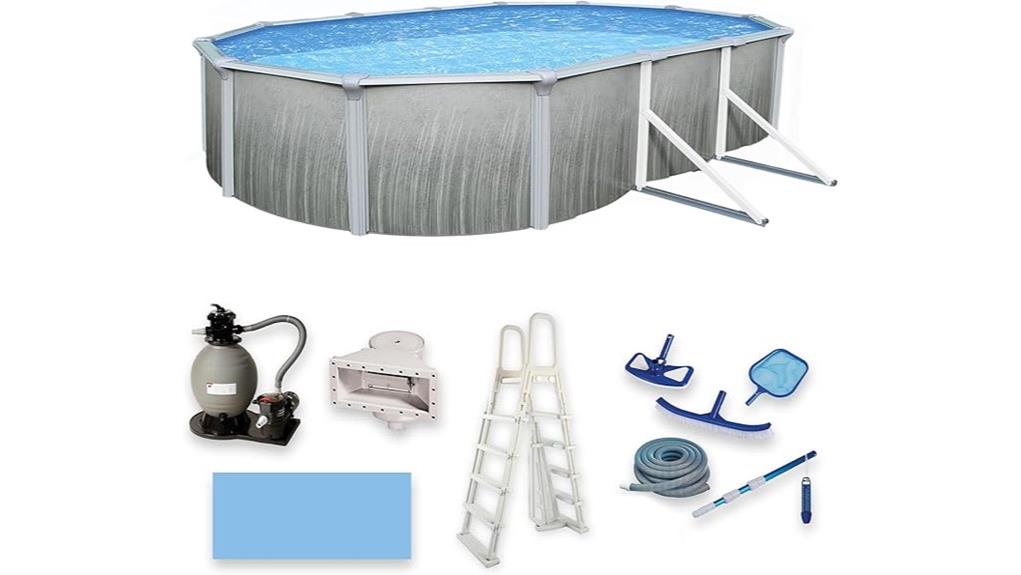
- Package includes sand filter, pump, skimmer/return, A-frame ladder, and maintenance kit for turnkey setup.
- Requires meticulous site prep, proper leveling, electrical access, and likely professional help for installation.
- 20-year limited warranty supports longevity, but expect routine chemical, energy, and occasional part costs.
What You Get: Full Specs and Included Components for the Martinique 12×24 Oval Pool
Get a clear picture of what arrives in the yard when you order the Martinique 12×24 Oval—this Blue Wave package includes the 12‑ft x 24‑ft, 52‑in deep metallic oval steel wall pool (288″ x 144″), a standard‑gauge blue overlap liner, a skimmer/return system, a sand filter with pump, an A‑frame ladder, a maintenance kit, and an instruction manual; the unit weighs about 638 lb, holds roughly 6,300 gallons, and features 7‑in top rails and steel uprights. You’ll compare included items to competitors: standard liner options are basic, but compatible replacements exist. Accessory upgrades like liner upgrades, upgraded filters, and enhanced ladders fit this package.
How Durable Is It? Materials, Corrosion Protection, and Long-Term Wear
Although the Martinique’s alloy steel walls and 7‑in top rails look robust at first glance, you should judge longevity by the corrosion protection and construction details: the steel is galvanized and then hot‑dipped in a zinc‑aluminum coating to slow rust, while resin top caps with UV inhibitors protect exposed edges from sun degradation. You’ll find this layered protection reduces corrosion compared with plain galvanized panels and lowers risk of metal fatigue from cyclical loads. Compared to resin‑only frames, the hybrid steel/resin approach trades off ultimate rust immunity for greater structural stiffness; routine inspection still limits long‑term wear.
Real-World Setup: Assembly, Space and Site Requirements, and Installation Tips
Having covered materials and corrosion protection, you’ll want to plan the site and assembly with similar attention to detail so the frame’s longevity isn’t compromised by poor siting or installation. You’ll compare level ground options: compacted gravel pad vs poured concrete; both need meticulous ground prep to prevent panel stress. Confirm electrical access for the pump and filter, and route conduits safely. Check local permits needed—setbacks, fence requirements, inspections—and document approvals. Measure clearance for the 12×24 oval and consider neighbor considerations like sightlines and noise. Follow the manual, enlist help for heavy panels, and use proper anchoring.
Operating Costs and Ownership: Filtration, Maintenance, Winterizing, and Warranty Realities
Regularly budgeting for filtration, maintenance, winterizing, and potential warranty claims lets you compare true ownership costs rather than just the purchase price. You’ll factor in pump runtime and energy consumption—stock sand systems are efficient but filter upgrades (cartridge or high-efficiency models) raise upfront costs while lowering long-term electricity use. Plan for routine chemical costs and occasional liner or part replacements; the included maintenance kit helps but doesn’t eliminate supplies. In colder climates, professional winterizing or quality cover options prevent damage yet add expense. Review the 20-year limited warranty details so you know what’s covered and what’ll remain your responsibility.
Is It Worth It? Pros, Cons, Ideal Buyer Profiles, and Final Recommendation
Costs for filtration, maintenance, winterizing, and potential warranty work shape whether the Martinique oval pool is a smart buy for you, because purchase price is only one part of long-term ownership. You’ll get durable galvanized steel, a full pump/filter package, and capacity suited to family gatherings, which compares favorably to inflatable or above-ground alternatives. Downsides: installation permanence, visible metal profile, and ongoing chemical/energy costs. Ideal buyers want a long-term backyard swim solution, value durability, and consider resale value modestly improved. Recommendation: buy if you prioritize sturdiness and regular use; look elsewhere if you need portability or ultra-low upkeep.
Some Questions Answered
Can This Pool Be Installed on Uneven or Sloped Ground?
No — you shouldn’t install it directly on uneven or sloped ground. You’ll need proper ground leveling and possibly retaining walls to create a stable, level base; otherwise the metal wall stresses and liner damage can occur. Compared to inground options, this aboveground model requires a flat prepared pad. You’ll typically grade, compact, and add a sand or concrete pad; retaining walls help if you must terrace a slope for long-term stability.
Are Replacement Liners Available in Custom Patterns?
Yes — you can get replacement liners in various pattern availability options, but custom sizing is limited. You’ll find standard-pattern liners from the manufacturer and aftermarket suppliers; they compare well on price and durability. If you need unique patterns or exact custom sizing, specialty vendors will cut and seam liners to fit, often costing more and requiring measurements. You’ll want to compare warranties, material gauge, and installation complexity before ordering.
What Electrical Requirements Does the Pump and Filter Need?
The pump and sand filter generally need a 120V, 60Hz dedicated circuit with a GFCI-protected outlet; check the pump specs for exact amperage and horsepower. You’ll want proper grounding and weatherproof wiring per local code. For electrical safety, compare motor FLA and breaker size, and use conduit for outdoor runs. If the unit lists higher amperage or a 240V motor, have a licensed electrician install the correct circuit.
Can the Pool Be Relocated After Initial Installation?
You generally shouldn’t relocate this pool after initial installation; it’s designed as a permanent, one-time placement. If you insist, you’ll face complex relocation logistics—dismantling, transporting heavy galvanized walls, replacing liner, and re-leveling. You’ll need to check site permissions, local codes, and warranty implications. Compared to inflatable or above-ground plug-and-play models, this requires more labor, parts replacement, and potential loss of warranty coverage. Plan professionally if you proceed.
Does Homeowner’s Insurance Typically Cover This Pool?
Often yes, your homeowner’s insurance will cover the pool for property damage and medical claims, but it depends. You’ll want to compare policies: check insurance coverage specifics, liability limits, and whether the pool counts as an attractive nuisance. Some insurers require higher liability limits or an endorsement for above-ground pools; others exclude certain damages. You should contact your insurer, get quotes, and document installation to make certain adequate coverage and meet policy conditions.