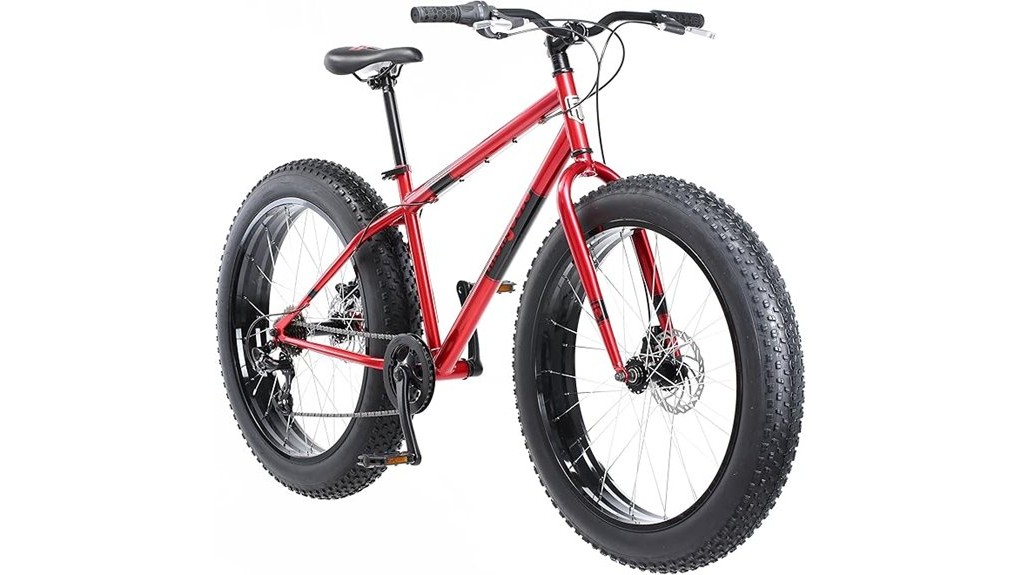
You’ll get a rugged, entry-level steel-frame fat-bike built for loose dirt and soft sand, with 26″ wheels and supersized knobby tires that boost contact patch and flotation. The 1×7 drivetrain favors low-end torque and simple maintenance while reducing chain-drop risk. Front/rear mechanical disc brakes give consistent stopping power when properly set up, and the threadless headset keeps steering precise. It’s heavier and less refined than higher-end bikes, but durable and budget-friendly — keep going to see detailed fit, service, and value notes.
Some Key Takeaways
- Durable steel frame and 26″ fat tires prioritize trail durability and flotation over lightweight performance.
- 1×7 drivetrain offers simple shifting and low-end torque, but limited top-end gearing for fast flats.
- Mechanical front/rear disc brakes provide reliable stopping power when properly adjusted and maintained.
- Bike ships ~80% assembled; you’ll need basic tools to attach bars, wheel, pedals, and adjust brakes.
- Best value for budget-minded riders wanting traction and durability, with trade-offs in weight and component precision.
Mongoose Dolomite at a Glance: Who It’s For and Core Specs
If you’re between about 5’4″ and 6’0″ and want a rugged, no-nonsense trail bike, the Mongoose Dolomite delivers core specs tailored for off-road use: a steel frame with adjustable components, 26-inch wheels mounted on lightweight alloy rims, supersized knobby fat tires, a 1×7 drivetrain, threadless headset, and front/rear mechanical disc brakes. You’ll appreciate that the target audience is entry-to-intermediate riders seeking durability and straightforward maintenance. Technical emphasis rests on proven, serviceable components rather than high-end weight savings. Expect predictable handling, robust traction from fat tires, and reliable stopping power from mechanical discs for trail-focused performance. The bike is a solid choice for outdoor riders who want gear suited to adventurous terrain and fat tire ebike lifestyle needs.
Frame, Fit, and Assembly: What to Expect Out of the Box
Curious how the Dolomite will fit and what work awaits when it arrives? You get a steel frame sized for riders roughly 5’4″–6’0″, with adjustable seatpost and stem to dial reach and saddle height. It ships about 80% assembled; expect to attach handlebars, front wheel, pedals, and adjust brakes. Required tools include Phillips screwdriver, 2.5–8 mm Allen wrenches, adjustable wrench and pliers—check tool compatibility with included hardware before starting. Torque to manufacturer specs on stem and stem bolts. For storage tips, deflate tires slightly for long-term storage and hang or stand bike to avoid frame stress. Consider upgrading to a comfort saddle designed for outdoor e‑bike riders to improve long-ride comfort and reduce pressure points.
Ride Performance: How the Fat Tires, Drivetrain, and Headset Handle Trails
Typically, the Dolomite’s oversized knobby tires provide predictable traction across loose dirt, gravel, and soft sand by increasing contact patch and lowering effective tire pressure without separate inflation changes. You’ll notice enhanced traction control from the wide footprint and aggressive tread, which smooths small bumps and reduces sink on soft substrates. The 1×7 drivetrain delivers straightforward gear shifting with minimal chain drop risk; ratios favor low-end torque for climbs and moderate top-end for flats. The threadless headset maintains steering precision at speed, resisting flex during quick corrections. Overall, the system balances stability, responsive handling, and efficient power transfer for trail riding. Riders who prefer outdoor adventures often favor bikes with fat ebike tires for better flotation and control on varied terrain.
Brakes, Comfort, and Durability: Stopping Power and Long-Term Use
While mechanical disc brakes on the Dolomite give you consistent stopping power in varied trail conditions, their modulation and longevity depend on proper setup and routine maintenance. You’ll notice predictable lever travel and solid initial bite from the metal pads on alloy rotors, but fine brake modulation requires pad alignment, cable tension tuning, and occasional bedding. Check caliper bolts, cable housings, and rotor trueness after rides; contamination accelerates wear. For long term corrosion resistance, rinse salt and mud, lubricate pivot points (avoid pads/rotors), and replace cables before fraying. With disciplined care, comfort and durability remain reliable on extended trail use. Choosing the right ebike brake pads and maintaining them according to outdoor riding conditions will further enhance performance and longevity.
Value Verdict: Cost, Alternatives, and When to Buy
Because the Dolomite pairs durable steel construction and fat-tire capability with entry-level components, you get a clear cost-to-performance profile: it delivers reliable off-road traction and straightforward maintenance for riders on a budget, but you’ll trade lighter weight, higher-end shifting, and premium braking for affordability. In a price comparison against similarly spec’d fat-tire bikes, the Dolomite undercuts many alloy- or mid-drive options while matching basic drivetrain and disc-brake function. Buy when you need rugged trail competence without premium specs; wait for seasonal discounts to maximize value. Consider alternatives if weight, precision shifting, or advanced braking matter. Riders who enjoy outdoor trail riding should also pack essential gear like a multi-tool and spare tube to stay prepared on remote rides, emphasizing essential gear for mountain e-bike adventures.
Some Questions Answered
Does It Include a Warranty or Manufacturer Support?
Yes — you’ll get basic manufacturer support and limited warranty coverage; contact customer service for specific warranty duration and terms. You’ll also have access to parts availability and technical support through the manufacturer or authorized dealers. Keep your receipt and serial number handy; they’ll verify coverage and expedite parts shipments. For detailed exclusions, claim procedures, or extended options, reach out to customer service or the manufacturer’s technical support channels before purchasing.
Can I Add a Rear Rack or Fenders?
Yes — you can add a rear rack or fenders, but you’ll need to check cargo compatibility and mud clearance. The steel frame and 26-inch fat tires provide mounting points for some racks; measure stays and dropout spacing for rack eyelets or use clamp-on solutions. For fenders, choose wide-profile units that maintain adequate mud clearance around knobby tires. Make certain attachment hardware and frame clearance suit your panniers and off-road use.
What Is the Bike’s Exact Weight?
The bike weighs about 45 pounds (20.4 kg). You’ll note the steel frame material contributes substantially to that mass, while the bike’s rigid suspension type (no front or rear suspension) keeps weight down relative to full-suspension models. That weight combines with 26-inch wheels, fat knobby tires, and alloy rims to affect handling and transport. You’ll want to account for assembly tools and any added racks or fenders when planning total loaded weight.
Are Replacement Tires and Tubes Readily Available?
Yes — replacement tires and tubes are readily available for 26-inch fat wheels, though seasonal sizing can affect stock. You’ll find standard fat tire tubes and specialty tubeless conversion kits from major brands. Verify rim width and valve type before buying: some alloy rims need tubeless-specific tape and valves. You’ll also need compatible tires rated for the rim width and intended off-road use to guarantee proper seal and performance.
Is It Compatible With Clipless Pedals?
Yes — the bike accepts clipless pedals, but you’ll need to check cleat compatibility with your chosen pedal system. The stock beach cruiser pedals aren’t clipless, so you’ll swap them for clipless units that match your shoe cleats (SPD, Look, etc.). If your shoes don’t match, you can use pedal adapters or replacement pedal bodies to convert thread size and cleat interface. Make certain correct crank thread and torque specs when installing.