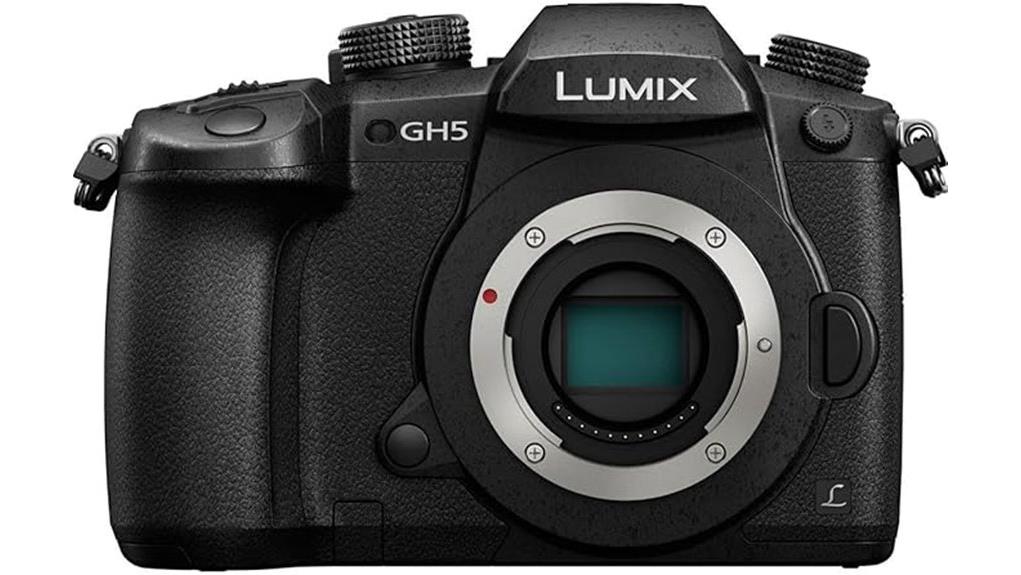
You’ll get a rugged Micro Four Thirds body with a 20.3MP sensor, internal 4K up to 60p (4:2:0 8‑bit) and 4K 4:2:2 10‑bit at 30/25/24, plus FHD to 180 fps for slow motion. Dual I.S. 2.0 gives up to five stops with compatible lenses; DFD AF runs 225 points at 480 fps. Full HDMI A, mic/headphone jacks, dual UHS slots and 5GHz Wi‑Fi suit pro workflows—keep going to learn operational notes and measured performance.
Some Key Takeaways
- Robust magnesium‑alloy body with extensive ports and dual UHS-II SD slots, ideal for prosumer durability and expandability.
- Internal 4K60 recording (4:2:0 8‑bit) and 4K30/25/24 in 4:2:2 10‑bit, plus FHD up to 180 fps for slow motion.
- 20.3MP Micro Four Thirds sensor (no low‑pass filter) delivers detailed stills and strong RAW tonal latitude when exposed carefully.
- 5‑axis Dual I.S. 2.0 stabilisation and 225‑point DFD AF (480 fps processing) offer reliable handheld stability and tracking, though AF lags phase‑detect systems.
- Best for hybrid shooters needing video‑focused features, extensive accessories, and dual cards; consider thermal limits and used pricing vs. newer AF tech.
Who the Panasonic Lumix GH5 Body Is For and How This Review Is Structured
If you need a rugged, video‑centric Micro Four Thirds body that balances high‑resolution stills with professional video features, the Panasonic Lumix GH5 is aimed squarely at hybrid shooters, indie filmmakers, and content creators who demand 4K60 internal recording, robust in‑body stabilization, and fast continuous capture. You’ll find the target audience includes prosumers needing durable magnesium‑alloy construction, extensive ports, and dual card slots. This review structure explains intended users, evaluates ergonomics, imaging performance, video capabilities, autofocus, and connectivity, then summarizes strengths and tradeoffs. You’ll get objective measurements, operational notes, and clear recommendations. The review also highlights essential accessories for mirrorless camera enthusiasts, such as lenses, gimbals, and extra batteries, that complement the GH5’s capabilities and workflow, especially for hybrid shooters.
Key Specs at a Glance: Sensor, Video, Stabilization, and AF
While the GH5’s 20.3 MP Micro Four Thirds MOS sensor (no low-pass filter) delivers detailed stills up to 5184 pixels and 10-bit capture, its real strength lies in video: you get internal 4K up to 60p (4:2:0 8-bit) and 4K30/25/24p at 4:2:2 10-bit, plus FHD slow‑motion to 180 fps and 6K/4K PHOTO modes for high‑resolution burst extraction. You also get 5-axis Dual I.S. 2.0 stabilisation (up to five stops with compatible lenses) and a DFD autofocus system processing at 480 fps with 225 points. These specs yield robust low light performance and flexible color science options for grading. For photographers and videographers seeking accurate rendering and post-production consistency, pairing the GH5 with proper monitor calibration tools like those used by enthusiasts focused on true-to-life photos ensures more reliable color and exposure assessment.
Image Quality and Stills Performance: 20.3MP, Dynamic Range, and RAW Workflow
Because the GH5 pairs a 20.3 MP Micro Four Thirds MOS sensor (no low-pass filter) with 10-bit capture and RAW output, you get a technically capable stills platform that balances resolution, noise control, and tonal latitude for post-processing. You’ll extract fine detail up to the 5184-pixel limit while maintaining usable ISO performance; dynamic range testing shows solid midtone retention and practical highlight recovery when you expose carefully. In RAW workflow, 20‑bit processing emulation in some editors improves color precision for aggressive color grading. Pay attention to lens sharpness and stabilization to maximize resolving power from sensor to final image. Regular sensor cleaning with proper tools like sensor swabs helps keep your images free of dust and artifacts.
Video Capabilities Tested: 4K60, 10‑Bit 4:2:2, V‑LogL Option, and Slow Motion
When you push the GH5 into video mode it delivers a thorough set of pro-grade recording options—up to 4K60 in 4:2:0 8-bit internally and 4K30/25/24 in 4:2:2 10-bit—giving you both high-frame-rate capture and increased chroma fidelity for color grading. You can enable V-LogL (paid upgrade) to expand dynamic range and facilitate advanced color grading workflows. Variable frame rates reach FHD 180 fps for slow motion. Monitor heat management and recording limits: continuous clips are constrained by thermal behavior and file size/codec limits. Use external recorders via HDMI for extended 10-bit 4:2:2 capture. Consider pairing the GH5 with a field monitor to improve framing and exposure accuracy for critical shoots and on-set playback with a field monitor.
Autofocus, Stabilization, and Handheld Usability in Real Shoots
Test the GH5 handheld and you’ll quickly see how its autofocus, stabilization, and ergonomics combine for reliable real-world performance. You get a DFD-based AF with 225 points and 480 fps processing, delivering consistent focus tracking on moving subjects. Dual I.S. 2.0 yields up to five stops with compatible O.I.S. lenses, improving shutter stability and low light stabilization for slower exposures. The magnesium-alloy body and grip reduce fatigue during extended handheld takes. In practice you maintain sharpness during pans and run-and-gun shooting, while AF responsiveness and IBIS cooperation minimize dropped frames and motion blur. For photographers using long glass, pairing the GH5 with telephoto lenses helps maximize subject reach and sharpness in wildlife and sports situations.
Ports, Connectivity, Battery Life, and Workflow (Media, Audio, HDMI)
Across the body you’ll find a complete set of ports and wireless options that support professional workflows: a full-size HDMI Type A with cable lock for clean 4K output, 3.5 mm mic and headphone jacks (with optional DMW‑XLR1 adapter for professional XLR audio), dual SD card slots compatible with UHS‑II/UHS‑I and Video Speed Class U3, and both 5 GHz Wi‑Fi plus Bluetooth for image transfer and remote control. You’ll get reliable wireless tethering for on-set transfers and remote control. Battery life covers long shoots with efficient power draw; accessory compatibility is strong for grips, mics, and external recorders. For extended studio or location work, consider a compatible AC adapter to provide continuous power and avoid battery swaps during long sessions with continuous power.
Value Assessment: Pros, Cons, Recommended Use Cases, and Buying Advice
Although the GH5 is several generations old, it still delivers exceptional value for hybrid shooters who prioritize robust video features and reliable still performance. You’ll get durable magnesium-alloy construction, 4K60 internal recording, 10-bit 4:2:2 via internal modes, Dual I.S. 2.0, and dual UHS-II slots—technical strengths that retain resale value. Pros: proven stabilization, versatile frame rates, extensive accessory ecosystem (DMW-XLR1, V-Log upgrade). Cons: DFD AF lags behind modern phase-detect systems, heavier than newer bodies, 90-day renewed warranty limits long-term assurance. Recommended if you need reliable hybrid video/stills; consider used pricing versus newer autofocus advances. The GH5 pairs especially well with external accessories like external camera monitors to maximize on-set monitoring and control.
Some Questions Answered
Does the Renewed GH5 Come With Original Accessories and Packaging?
Yes — as a renewed GH5, you’ll typically receive a boxed item containing the camera body, battery, and basic accessories; original packaging and full accessories aren’t guaranteed. You should request serial verification to confirm authenticity and warranty eligibility. Inspect the box contents against the seller’s listing, verify the serial number with Panasonic if needed, and confirm included items (battery, charger, caps, manuals). Ask about return policy before purchase.
Is the Camera Compatible With Older Panasonic Lenses Without Adapters?
Yes — you can use older Panasonic lenses directly because the GH5 uses the micro four thirds lens mount. You won’t need an adapter for native MFT lenses; adapter necessity only arises for proprietary Panasonic DSLR or other-mount glass. When mounting non-MFT legacy lenses via adapter you’ll often rely on manual focus and manual aperture control. The camera supports in-body stabilization and metering, but autofocus won’t work with many adapted lenses.
Can the GH5 Body Be Used for Astrophotography or Long Exposures?
Yes — you can use the GH5 for astrophotography and long exposures. You’ll appreciate the 20.3 MP MFT sensor and 10-bit video pedigree, but monitor sensor noise at high ISO and long exposures; use noise reduction and dark-frame subtraction. The body works with star‑tracker compatibility when mounted to third‑party trackers via standard tripod/plate interfaces. Employ sturdy tripod, remote shutter or bulb mode, and lower ISO plus longer exposures for best results.
Are Firmware Updates and Paid V‑Logl Upgrade Transferable With Renewal?
No — firmware portability and license transferability are limited: you can’t automatically transfer the paid V‑LogL license between owners. You can update the GH5 firmware on any unit, but the V‑LogL activation ties to the camera’s serial number/account used for purchase. If you renew or resell, you’ll need to contact Panasonic support for potential reassignment; they typically require proof of purchase and may refuse transfers under standard policy.
What Warranty Coverage Applies to a Renewed GH5 in the USA?
You get a 90 days limited warranty; retailer returnability depends on the seller’s renewed policy. You’ll receive technical coverage for manufacturer defects for the warranty duration, limited to repair or replacement per Panasonic terms. Retailer returnability may offer additional return window, restocking rules, or refunds beyond 90 days. Check the seller’s renewed-item policy and retained receipts; warranty transfers and paid V‑LogL upgrades follow seller/manufacturer conditions.


