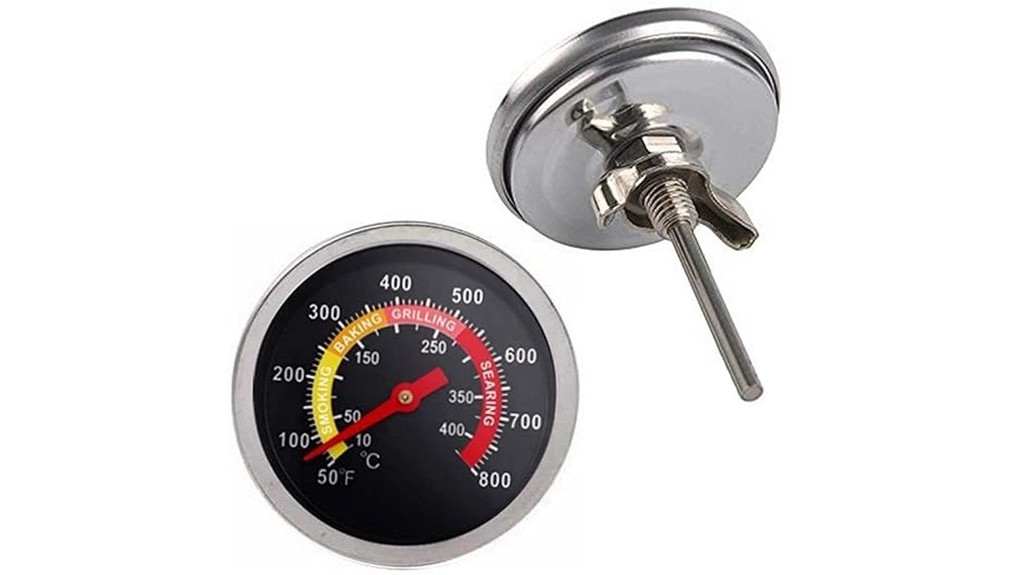
You’ll get two durable stainless-steel dial gauges that measure grill/smoker chamber or surface temps, not meat core temperatures, so they’re best for general zone monitoring and not precision doneness checks. They mount easily with the supplied thread and wing nut; place them at grate level and avoid direct flames for consistent readings. The waterproof, fog-resistant finish holds up to grease and cleaning. They’re a solid backup to digital probes, and more details follow if you want.
Some Key Takeaways
- Two stainless-steel gauges provide reliable, real-time chamber temperature readings where mounted, but not meat core temperatures.
- Mount consistently at grate level, angled into the cooking chamber, and use the wing nut for repeatable placement.
- Durable, waterproof stainless construction and anti-fog lenses withstand cleaning, grease, and outdoor use.
- Avoid direct flame and soot buildup; rotate food and cross-check with a handheld probe for precision.
- Good as basic analog monitoring or backup; use calibrated digital probes or Bluetooth units for exact meat temps.
What the 2 Pcs BBQ Grill Temperature Gauge Measures and How Accurate It Is
The 2 pcs BBQ grill temperature gauge measures the internal cooking temperature of grills, smokers, pits, and ovens via two easy-read dials, giving you real-time surface-level readings where you mount them. You’ll rely on these stainless steel gauges for a quick internal temp snapshot of the cooking environment, not the meat core. Compared to digital probes, they’re simpler and more durable but less precise for exact doneness. Accuracy depends on probe placement relative to heat sources and vents; incorrect placement skews readings. For general monitoring of grill or smoker conditions they’re reliable, though they don’t replace dedicated meat probes. They’re a good fit for enthusiasts looking for basic, durable monitoring with outdoor cooking applications.
How to Mount the Gauges for Consistent, Usable Readings
Start by choosing a consistent mounting spot on your grill or smoker so you can compare readings over time; mounting location directly affects the temperature you’ll see and how useful it is. Mount the dial where it reads the cooking zone, not the lid edge, and keep the same mounting height across uses for comparable results. Use the supplied screw thread and wing nut to secure the gauge; that hardware gives repeatable placement. Check probe angle so the stem points into the cooking chamber, not up or down, and avoid obstructing airflow. Mount two gauges symmetrically if monitoring different zones. For persistent accuracy consider using calibrated thermometers to verify readings and ensure reliable performance over time.
Durability Check: Waterproof Finish, Fog Resistance, and Stainless-Steel Build
Once you’ve mounted the gauges for consistent readings, check how the materials and finish hold up under real cooking conditions. You’ll find the stainless-steel build offers solid corrosion resistance compared with plated alternatives, resisting rust from humidity and smoke. The waterproof finish prevents water intrusion during cleaning or rain, and the lenses won’t get foggy so readings stay visible. Finish durability seems high: coatings remain intact after wiping and exposure to grease. Overall, these gauges balance rugged construction and practical maintenance better than cheaper models, giving reliable service in grills, pits, and smokers without frequent replacement. A quality grill cover with a waterproof finish helps protect the gauges and extends their lifespan.
Using the Gauges in BBQs, Smokers, Pits, and Ovens: Tips and Common Pitfalls
When you mount and use these gauges, pay attention to placement and heat source so readings match the cooking zone you’re checking. You’ll want one gauge near the main heat and another where food sits; that comparative view prevents surprises. Make sure probe placement avoids direct flame and sits at grate level for accurate internal grill/oven/smoker readings. Regular grill cleaning prevents soot buildup that skews readings and fouls the stainless finish. Tighten the wing nut but don’t overforce the screw thread to avoid warping the panel. Watch for hotspots by rotating food and cross-checking with a handheld probe when precision matters. Consider keeping spare knobs and replacement parts on hand to ensure quick fixes and prolonged grill life.
Final Verdict: Best Users for This 2-Piece Set and Comparable Alternatives
Although this two-piece stainless-steel gauge set won’t replace a precision digital probe, it’s a solid, affordable choice if you need basic, reliable temperature monitoring for grills, smokers, pits, or ovens. You’ll appreciate simple installation, waterproof finish, and two dials to monitor different heat zones simultaneously. Choose this set if you want durable analog feedback for routine BBQs, winter grilling, or as backups to electronic probes. If you require exact internal meat temps or remote alerts, consider a calibrated digital probe or Bluetooth thermometer. For hobbyists and casual cooks, these gauges balance cost, visibility, and ruggedness effectively. They’re especially handy when used alongside extension cords to power outdoor cooking accessories safely.
Some Questions Answered
Do Replacement Probes or Parts Come With the Gauges?
No, replacement probes or parts aren’t included with the gauges. You get two stainless steel dial units with mounting hardware, but no replacement probes or accessory adapters in the package. If you need spares, you’ll have to buy replacement probes or compatible accessory adapters separately. Compared to some kits that bundle extras, this set is basic—good for standard use but less convenient if you want backup probes or specialized adapter options.
Are These Gauges Safe for Use With Gas Grills?
Yes — you can use them on gas grills, but mind material safety and installation tips. Stainless steel construction and waterproof finish resist heat and grease better than cheaper alloys, so they’re comparatively safe for external mounting. Don’t insert probes into direct flame; mount via the screw thread and wing nut on the grill lid or panel where they read internal air temperature. Regularly check seals and placement to avoid heat hotspots.
What Temperature Range Do the Dials Display?
The dials display a typical grill range from about 0°C to 300°C (32°F to 572°F), letting you monitor both ambient range and direct cooking zones. You’ll see graduated markings for low, medium and high heat, so you can compare oven, smoker and pit temperatures at a glance. Because you get two gauges, you can track separate cooking zones simultaneously and decide which area needs more fuel or adjustment.
Is There a Warranty or Return Policy Included?
There’s no standard manufacturer warranty listed, and return policies depend on the seller, so check Packaging quality and Seller reputation before buying. If the packaging quality looks professional and the seller reputation is strong, you’re more likely to get reliable returns or replacements. Compare seller terms: some offer 30-day returns or satisfaction guarantees, others are final sale. You should contact the seller directly to confirm warranty or return specifics.
Can the Gauges Be Calibrated by the User?
Yes — you can perform basic user calibration and DIY adjustment on these gauges. Compared to factory-calibrated electronic models, they let you tweak accuracy using simple methods (ice bath or boiling water) and the mounting wing nut for minor alignment. You’ll get reasonable precision for BBQ and oven use, though they’re not as precise as professional probes. If you need lab-level accuracy, opt for a certified thermometer instead.