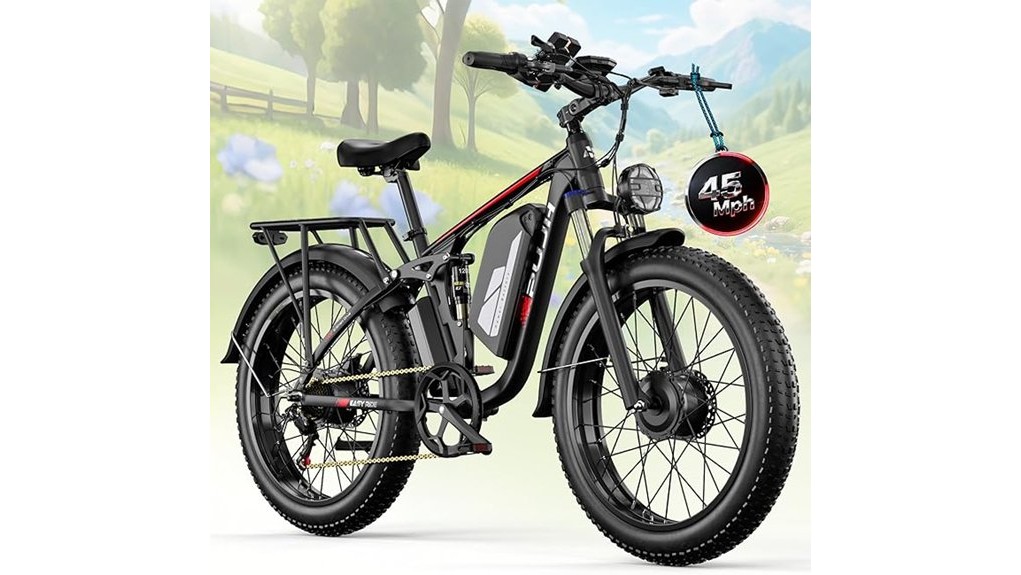
You’ll get brutal acceleration and genuine off‑road ability from the Peak 6000W dual‑motor e‑bike, with 6,000W peak power, 110 Nm torque, and a top speed near 45 MPH in ideal conditions. Twin removable 60V packs give 1,200 Wh and 35–110 miles depending on use, while full suspension, 24×4″ fat tires, hydraulic brakes, and plentiful accessories boost comfort and utility. It’s heavy and complex, but ideal if you want raw power and range—keep going to learn specifics.
Some Key Takeaways
- Dual brushless motors deliver peak 6000W combined power and 110 Nm rated torque for rapid acceleration and hill-climbing.
- Twin removable 60V packs total 1,200 Wh, offering 35–110 miles real-world range depending on mode, terrain, and load.
- Full seven-level suspension, 24×4.0″ fat tires, and 6061 aluminum frame provide all-terrain stability but add weight.
- Dual hydraulic disc brakes, turn signals, horn, and bright rear lights give strong stopping power and improved visibility.
- Heavy (82.7 lb) and complex controls favor power and utility over lightweight agility and simple maintenance.
Performance and Power Breakdown: Motors, Torque, Top Speed, and Ride Modes
Although the Peak 6000W uses two brushless motors to deliver a peak 6000W output, you’ll most often feel a combined, controllable surge rather than raw, uncontested power—rated torque is 110 Nm and the bike can reach up to about 45 MPH in ideal conditions. You’ll notice throttle response is immediate in dual-motor modes and selectable across six ride profiles, so you can tame that high power draw. Noise levels stay moderate for motors this size, though aggressive throttle increases sound and vibration. Under sustained hard runs monitor motor heat; occasional cooling pauses preserve performance and longevity. For riders who enjoy outdoor adventures, pairing the bike with high-performance ebike motors accessories can enhance durability and off-road capability.
Battery, Real-World Range, and Charging Workflow
The Peak 6000W’s twin removable 60V battery packs (1,200 Wh combined) give you substantial real-world flexibility: expect 35–110 miles per charge depending on power mode, terrain, rider weight, and how often you run both motors at full output. You’ll appreciate removable cells for indoor charging and straightforward Battery management via the display—monitor state of charge, balance cells, and avoid deep discharges to preserve capacity. In practice, plan conservative range for mixed-terrain rides and carry the spare pack if you’ll be aggressive. Follow basic Charging etiquette: charge in a cool, dry spot, avoid overnight trickle on non-smart chargers, and lock packs before riding. Consider carrying a compatible spare ebike battery on longer outings to extend your adventures.
Frame, Suspension, Tires, and Off-Road Capability Tested
When you take the Peak 6000W off-road, its 6061 aluminum frame and full seven-level suspension package—front fork, rear shock, and seat springs—keep the ride composed over loose sand, snow, and rocky trails. You’ll notice confident frame geometry that balances stiffness for sprinting and compliance for rough sections. Suspension tuning favors mid-stroke support, limiting harsh bottom-outs while preserving small-bump sensitivity. The 24″×4.0″ fat tires grip soft surfaces and smooth chatter on rocks; combined with 6″ seatpost travel they broaden usable terrain. Overall, the chassis instills confidence for aggressive trail runs, though heavy weight dampens technical flickability. Riders should also carry essential protective gear and tools for trail safety and repairs, such as helmet and multi-tool kits, when heading into remote areas.
Controls, Braking, Comfort Features, and Daily Usability
Often you’ll find the Peak 6000W’s cockpit feels purpose-built for heavy-duty daily use, with intuitive controls and safety features that prioritize confidence over complexity. You get a clear control layout: colorful LED display, twist throttle, cruise, horn, turn signals, and USB/phone mount placed logically so you won’t fumble. Throttle ergonomics are good for long rides, though the twist takes some break-in time. Dual hydraulic discs stop decisively and the brake taillight adds visibility. Seat comfort is above average with adjustable stem and spring seatpost travel. Daily storage is practical thanks to the solid cargo rack and included fenders. Rear visibility is further enhanced by bright rear ebike lights that improve safety during outdoor rides.
Who Should Buy This Bike? Final Pros/Cons Buying Checklist
Because you want raw power, all-terrain capability, and utility in one package, the Peak 6000W suits riders who prioritize performance, hauling, and versatility over lightweight simplicity. You should buy it if you’re an urban commuter who needs rapid acceleration, a cargo-ready rack, and weather-proof tires, or if you plan long tours across mixed terrain and want removable batteries for extended range. Pros: massive torque, dual motors, full suspension, hydraulic brakes, 1,200 Wh battery, accessories included. Cons: heavy (82.7 lb), complex controls, limited warranty span, range varies widely by mode and load. Check height, weight, and transport options. Consider upgrading to higher-capacity ebike batteries to power extended adventures.
Some Questions Answered
How Loud Are the Motors at Full Throttle?
You’ll hear noticeable motor noise at full throttle—loud whine and mechanical buzz from the dual motors—though it isn’t deafening. That sound increases with speed and load, so rider comfort can be affected on longer rides or rough terrain. The noise’s frequency can feel intrusive but isn’t harsh; you’ll still hear wind and tire roar. Using ear protection or softer seat cushioning can improve rider comfort on extended high‑power runs.
Can I Legally Ride This on Local Bike Paths?
Maybe — you’ll need to check local regulations and trail classification first. Many bike paths ban high-powered e-bikes or motorized vehicles; some allow Class 1 or 2 e-bikes only. With dual motors and 6000W peak, this bike often exceeds permitted power/speed limits, so it’s likely excluded. Contact local parks or DOT, confirm trail classification, and carry proof of compliance or choose lower-power mode to avoid fines or being asked to leave.
Are Replacement Batteries Widely Available?
Yes — replacement batteries are generally available, but options vary. You’ll find aftermarket options from third-party sellers and some OEM spares through the dealer; check compatibility with the dual 60V pack. Remember warranty coverage may be voided if you use non-OEM cells, so weigh cost versus protection. Inspect connector types, capacity (Wh), and lockable design, and confirm shipment policies and return terms before buying a replacement.
How Long Does Full Assembly at Home Typically Take?
You’ll typically finish full assembly at home in 60–120 minutes. You’ll need basic tools required: Allen keys, adjustable wrench, torque wrench, screwdriver and pedal spanner. Follow the manual’s torque specs for handlebars, stem and axle bolts to avoid damage. Take extra time routing cables, mounting batteries and adjusting brakes/gears; if you’re less experienced, expect up to two hours or seek professional setup to guarantee safe, precise assembly.
Is There Theft Protection Beyond the Lockable Battery?
Yes — beyond the lockable battery, you’ll want GPS tracking and an alarm system for stronger theft protection. The bike itself doesn’t list built‑in GPS or an alarm, so you’ll likely add an aftermarket tracker and motion alarm or upgrade to a smart lock. Evaluate cellular GPS units with geofencing and loud alarms tied to your phone for best recovery chances, and secure parking/bolt locks as layered deterrents.