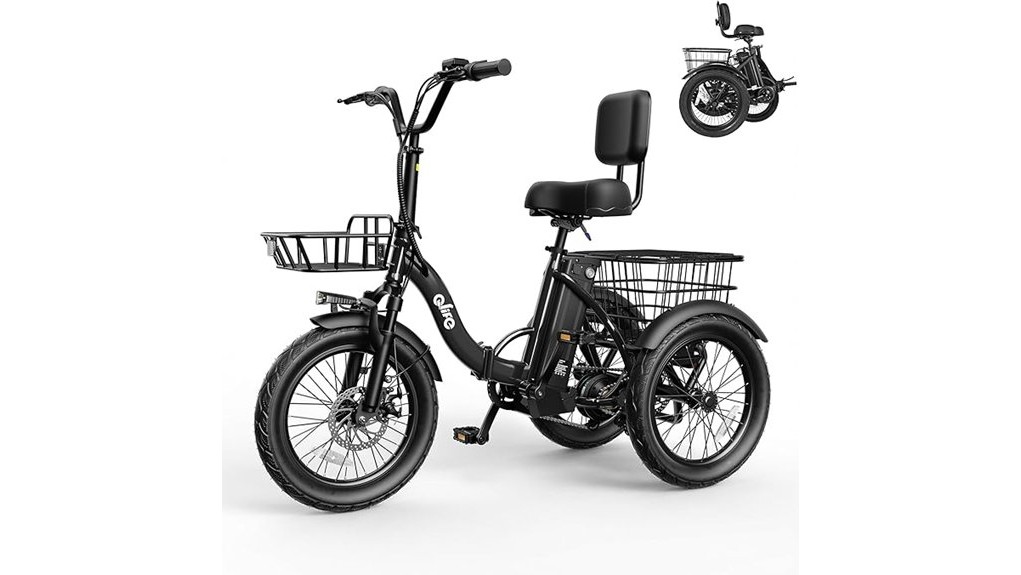
You’ll get a sturdy, foldable step-thru trike with a 1200W peak hub motor, 499 Wh removable battery, and a built-in cargo rack that’s great for errands and short commutes. It delivers strong low-end torque and stable handling thanks to a rear differential, though top speed is electronically capped near 18 MPH and acceleration slows with heavy loads. Brakes and suspension are practical for urban use, but steel frame corrosion and modest long-term durability are concerns—keep going to learn specifics.
Some Key Takeaways
- Foldable step-thru 3-wheel trike with 1200W peak rear hub motor offering strong low-end torque for starts and short climbs.
- 499 Wh removable battery yields practical urban range only under conservative assist and flat terrain.
- Upright geometry, front suspension, and rear differential provide stable, predictable handling for errands and cargo.
- Hydraulic-feel disc brakes deliver strong stopping power but require care under heavy loads to avoid nose-dive.
- Best for riders prioritizing cargo capacity, stability, and foldability; not ideal as a long-trip car replacement.
Qlife Triker at a Glance: Specs, Key Features, and Who It’s For
Meet the Qlife Triker: a foldable, step-thru 3-wheel electric bike built for urban commutes, light gravel and unpaved trails, with a carbon-steel frame, rear cargo rack, and an 18–20″ wheel setup. You’ll appreciate folding convenience for tight storage and transport, plus the built-in rack for errands. Specs mix utility with limits: 1200W peak motor, 499Wh removable battery, 7-speed gearing, front suspension, and disc brakes. It suits riders 4.9–6.2 ft and heavier loads up to 350 lb. You should choose it if you prioritize stability and cargo capacity for urban commuting over nimble, high-speed performance. Designed for outdoor riders who favor practical, adventure-ready step-through ebikes, the Triker emphasizes durability and cargo versatility for daily use and short trips Adventure-Ready.
Real-World Performance: Motor, Battery Range, Speed, and Ride Comfort
Although the 1200W peak brushless hub motor gives you strong low-end push for starts and short climbs, the Triker’s electronics cap real-world top speed to about 18 MPH, so don’t expect highway pace or rapid overtakes. You’ll appreciate immediate torque delivery off the line and confident hill assists, though heavy loads trim acceleration. The 499 Wh battery hits advertised range only under conservative assist and flat routes; battery longevity depends on your riding habits and charging routine. Ride comfort benefits from upright geometry, front suspension, and generous seat cushioning, while motor noise level is moderate and unobtrusive for urban use. For riders looking to upgrade or customize controls, consider smart ebike motor controllers to tailor performance and efficiency.
Safety, Stability, and Controls: Brakes, Suspension, Rear Differential, and Handling
Following the Triker’s motor and battery behavior, you’ll want to know how the bike stops, absorbs bumps, and tracks when you’re carrying cargo or cornering. You get hydraulic-feel disc brakes that deliver strong stopping power; brake modulation is decent but needs rider attention during heavy loads to avoid nose-dive. Front suspension soaks urban potholes, though travel is modest for rougher gravel. The rear differential improves stability and reduces scrub in turns, but differential tuning feels conservative—good for safety, less so for aggressive cornering. Handlebars adjust for reach; overall handling is stable, predictable, and tuned for utility rather than sport. For riders concerned with maintenance and performance, choosing the right brake pads can significantly affect stopping power and modulation.
Daily Use and Practicality: Folding, Cargo Capacity, Accessories, and Fit
For everyday errands and storage, the Triker’s folding frame and built-in cargo rack make it a practical choice—you can collapse it for compact transport and still haul groceries or a week’s worth of supplies. You’ll appreciate the folding mechanism for apartment living and trunk travel, though hinges feel heavy and need regular inspection. Cargo versatility is solid for bags and a small crate but top weight limits constrain bigger hauls. Accessory integration is decent—mirror and phone bag fit neatly, and extra mounts would help. Rider fitment suits 4.9–6.2 ft users, but test seating position before buying. The Triker is well suited for compact ebike riders who enjoy outdoor activities and need portability for trips to trailheads or campsites, making it a good option for compact eBikes.
Final Verdict: Strengths, Drawbacks, and Who Should Buy the Qlife Triker
While it won’t replace a car for long trips, the Qlife Triker delivers a compelling mix of stability, cargo practicality, and electric range that makes it a strong choice for urban errands and light off-road lanes. You’ll appreciate steady handling, the removable 499Wh battery, and foldability for storage. Drawbacks include carbon steel corrosion risk, unclear long term durability, and modest warranty that could affect resale value. It’s best if you need cargo capacity, easy mounting, and accessory compatibility for racks or bags. Enthusiasts will find community support useful for tweaks; casual riders seeking car replacement should look elsewhere. The bike fits well into a family-focused lineup for outdoor riders looking to carry kids or gear with ease and cargo compatibility.
Some Questions Answered
Is Assembly Required Out of the Box?
Yes — you’ll need to do some assembly out of the box. You’ll attach the handlebars, front wheel, and mirror, secure the cargo rack, and install the removable battery into its storage. The package includes basic assembly tools and a tool kit, but you’ll want common wrenches and screwdrivers on hand. Follow the manual closely, check torque on bolts, and test brakes and electrical connections before riding for safety.
What Maintenance Schedule Does the Battery Need?
You should follow a regular battery care schedule: charge after each ride if below 60–70%, avoid full 0% runs, and store at ~40–60% if not using for weeks. Cycle the battery fully every 1–3 months to recalibrate the meter. Track charge cycles and stop using the pack near its rated cycle life. Inspect connections monthly, keep it clean/dry, and avoid extreme temperatures to preserve capacity and safety.
Can the Trike Be Used in Light Rain or Wet Conditions?
Yes — you can ride in light rain, but take precautions. Use weatherproofing tips: keep the removable battery dry, seal connectors, and wipe electrical components after rides. Mind traction considerations: lower speed, avoid sudden maneuvers, and choose routes with good grip since wet surfaces reduce tire performance. Check disc brakes after wet rides and dry moving parts. Don’t ride through deep water or heavy storms to avoid damage and safety risks.
Are Replacement Batteries Available and Compatible?
Yes — replacement batteries are available from Qlife, and you can swap the removable 499 Wh pack. You’ll want to confirm battery availability and warranty coverage with the manufacturer or seller before buying. Third party compatibility exists but varies; third‑party packs may fit physically yet differ in connectors, voltage, or BMS, which can void warranty or affect performance. You should prioritize OEM or vetted aftermarket batteries for safety and longevity.
Does It Fit in a Standard Car Trunk When Folded?
Yes — it can fit, but cautiously. You’ll want the folding dimensions to match your car: the Triker folds compactly but stays bulky due to its 3-wheel frame and cargo rack. Check trunk compatibility by measuring your trunk opening and depth against the folded measurements (wheel size and frame add bulk). If you have a mid-to-large sedan, SUV, or hatchback, you’re more likely to fit it; small trunks may be too tight.